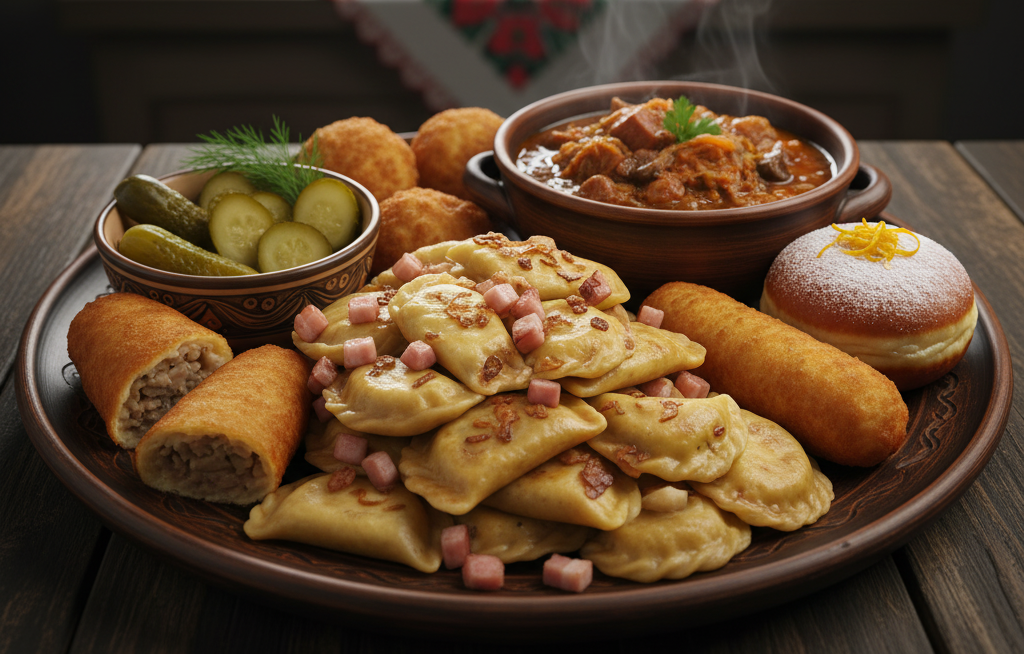
If you’re planning a trip to Poland, get ready to feast! This country is a vibrant hub of comforting, hearty cuisine that often surprises you with its depth of flavor. From soups to dumplings to street-snacks, here’s your ultimate foodie guide — with pronunciations so you can order like a local!
Some links here are affiliate links. If you buy something, I might earn a small commission—thanks for supporting my blog! I only share products I use and stand behind.
Soups & Starters
Polish meals often begin with a steaming bowl of soup, especially in colder months. Soups are a cornerstone of Polish cooking — warm, tangy, or rich, depending on the season.
1. Żurek (ZHOO-rek – the Ż pronounced like the g in biege)
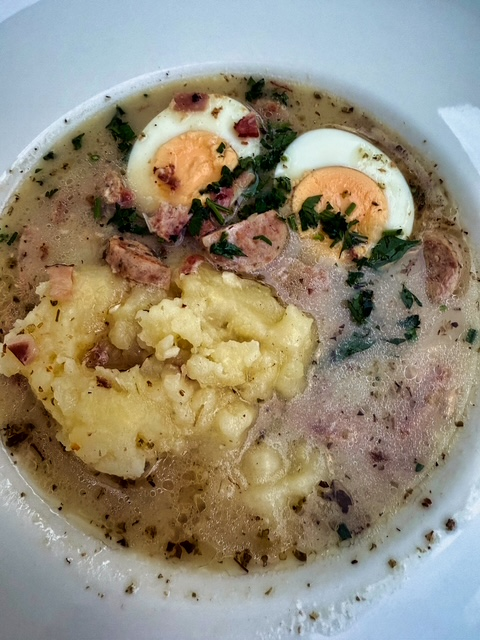
A tangy rye soup often served in a hollowed-out bread bowl. It’s made with fermented rye flour and often includes sausage, egg, and potatoes. A true Polish comfort food, especially popular around Easter but delicious year-round.
2. Chłodnik (HWOD-nyeek)
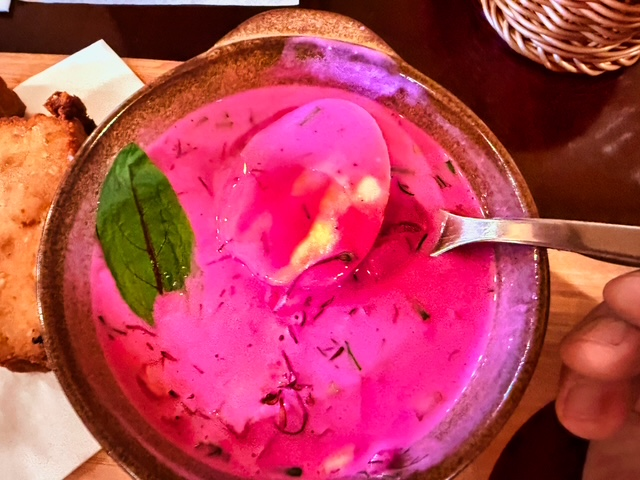
A chilled beet soup that’s as beautiful as it is refreshing — vibrant pink, creamy, and full of summer flavors. Made with beets, cucumbers, dill, and a touch of yogurt or kefir, it’s often served with a halved boiled egg on top. Light and cooling, chłodnik is a beloved seasonal dish in Poland, enjoyed mainly during the warm summer months.
3. Barszcz (BARSHCH)
This classic beetroot soup can be clear or hearty, sometimes served with small dumplings called uszka (OO-shka – mini pierogis with mushroom filling). Earthy, slightly sweet, and deeply comforting.
4. Flaki (FLAH-Kee)
This one’s not for the faint of heart. Flaki is a traditional tripe soup — thick, peppery, and deeply savory. It’s a classic among locals… but let’s just say we did not survive the flaki.
5. Krokiety (Kro-KYET-y)
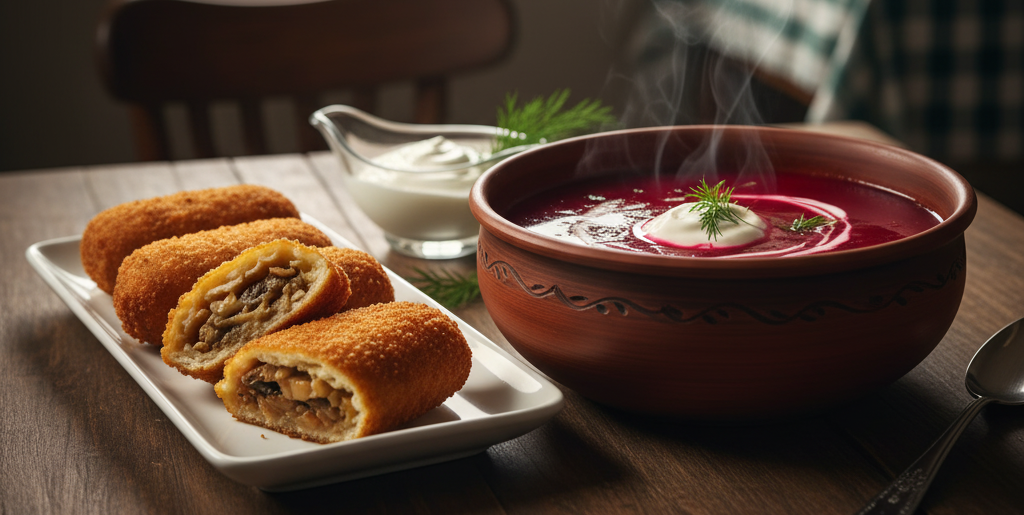
Crispy, golden crepes filled with meat, mushrooms, or cabbage, then breaded and fried to perfection. They’re often served alongside barszcz (beet soup) for dipping, which balances the richness with a tangy, earthy flavor. Krokiety can be enjoyed as an appetizer or a main dish — and they quickly became a favorite meal for our tween, who loved the crunchy exterior and soft, savory filling.
6. Śledź w śmietanie (Shledge V Shmyeh-TAH-nyeh)
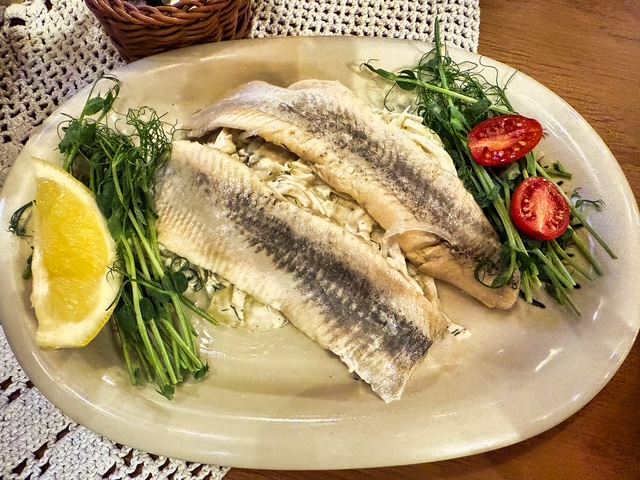
Herring in sour cream with onions and apples — a classic Polish starter that’s tangy, creamy, and surprisingly refreshing. In Poland, herring (śledź) is prepared in countless ways: marinated in oil, layered in tomato sauce (po kaszubsku), or mixed with vinegar and herbs. Each version has its own regional twist, but śledź w śmietanie remains one of the most beloved.
Growing up, herring was always part of our family table during Christmas Eve (Wigilia) and Easter — a simple dish that felt both humble and special. Seeing it on menus across Poland brought back that familiar sense of celebration and tradition that transcends generations.
7. Oscypek z żurawiną (Oh-SIH-Pehk Z Zhoo-Rah-VEE-Noo)
A smoked sheep’s cheese from the Tatra Mountains, traditionally crafted by highland shepherds (baca) using age-old methods passed down through generations. Firm, salty, and beautifully patterned, it’s lightly grilled until warm and soft inside, then topped with sweet cranberry jam — a perfect balance of smoky and sweet. Oscypek is a true regional delicacy found mainly in southern Poland, especially in Zakopane and Krakow, and is most often available during the summer and early autumn months when the cheese-making season is in full swing.
If you’re visiting Kraków or Zakopane in the warmer months, keep an eye (and nose!) out for oscypek stands in market squares — you’ll smell that smoky, toasty aroma before you even spot the grill.
Mains (Beyond Pierogi)
Now for the heart of Polish cooking — the mains. These dishes are rich, filling, and made with love (and often a lot of cabbage).
1. Bigos (BEE-gohs) — The Hunter’s Stew
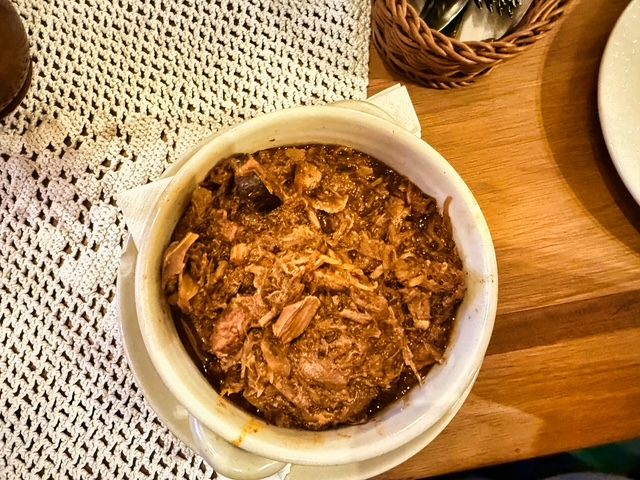
This hearty stew is Poland’s national dish and a Krakow staple and my husband was in heaven. Bigos is a slow-cooked blend of sauerkraut, fresh cabbage, various meats (pork, beef, sausage), mushrooms, and spices. It’s smoky, savory, and the perfect comfort food to warm you up after wandering the chilly cobblestone streets.
Give my husband bigos with golonka (pork hock)? And he’s living his best life. It’s the ultimate comfort Polish food.
2. Gołąbki (go-WOMP-kee)
Cabbage rolls stuffed with rice, onions, and minced meat, then simmered in tomato sauce. Comforting and homey, they taste like someone’s grandmother made them.
3. Kotlety schabowe (ko-TLEH-ty Skha-BOH-veh)
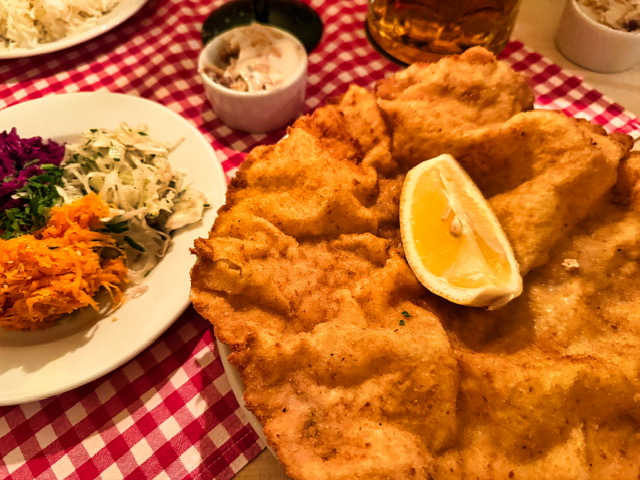
Polish pork cutlets — breaded, crispy, and golden brown. Similar to schnitzel but somehow more satisfying, usually served with boiled potatoes and mizeria (mee-ZEH-ryah) on the side. Mizeria is a cool cucumber salad mixed with sour cream, dill, and a touch of vinegar — creamy, tangy, and refreshing, the perfect balance to the rich, fried cutlet. Despite its name (which literally means “misery”), there’s nothing sad about this classic pairing — it’s pure comfort on a plate.
4. Golonka (go-LON-kah)
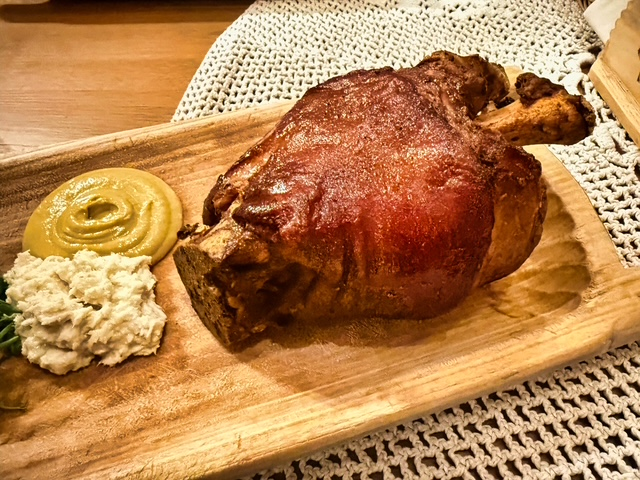
A roasted pork knuckle with tender, fall-off-the-bone meat and perfectly crispy skin — a true Polish delicacy and the ultimate test of your appetite. It’s typically served with sharp mustard, spicy horseradish, and a heap of tangy sauerkraut. My husband was in absolute Polish food heaven with this one — the kind of dish that makes you forget about table manners and just savor every bite. It’s rich, rustic, and deeply satisfying — the definition of comfort food, Polish-style.
5. Gulasz (GOO-lahsh)
A rich, hearty stew made with tender chunks of beef or pork slow-simmered with paprika, onions, and sometimes bell peppers — pure comfort in a bowl. In Poland, it’s often served over placki ziemniaczane (PLATS-kee zhyem-nyah-CHA-neh) — crispy, golden potato pancakes that soak up every drop of the flavorful sauce. It’s the kind of meal that warms you from the inside out, especially after a long day of exploring. Rich, rustic, and deeply satisfying — a Polish classic that tastes like home.
6. Pyzy (PIH-zih)
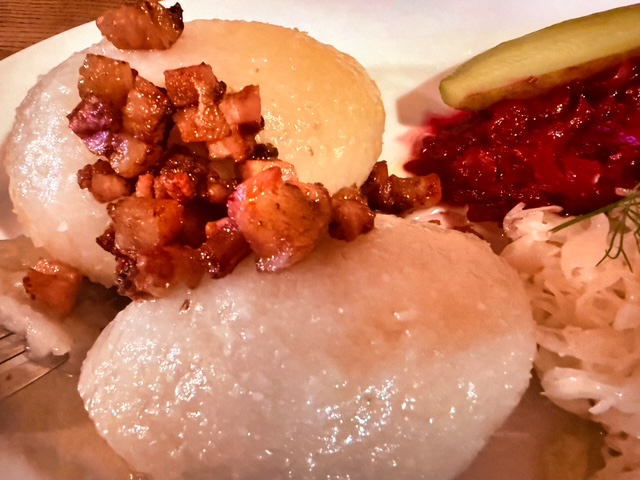
Soft, pillowy potato dumplings that are pure comfort on a plate. Filled with savory minced meat or earthy mushrooms, pyzy are a hearty, rustic Polish classic — kind of like a cross between gnocchi and a stuffed dumpling. Even coming from a Polish family, this was a dish I had never tried before — and I absolutely loved it. Warm, tender, and perfectly seasoned, it’s the kind of meal that makes you wonder how it took you so long to discover it.
🥟 Pierogi (PYEH-roh-ghee)
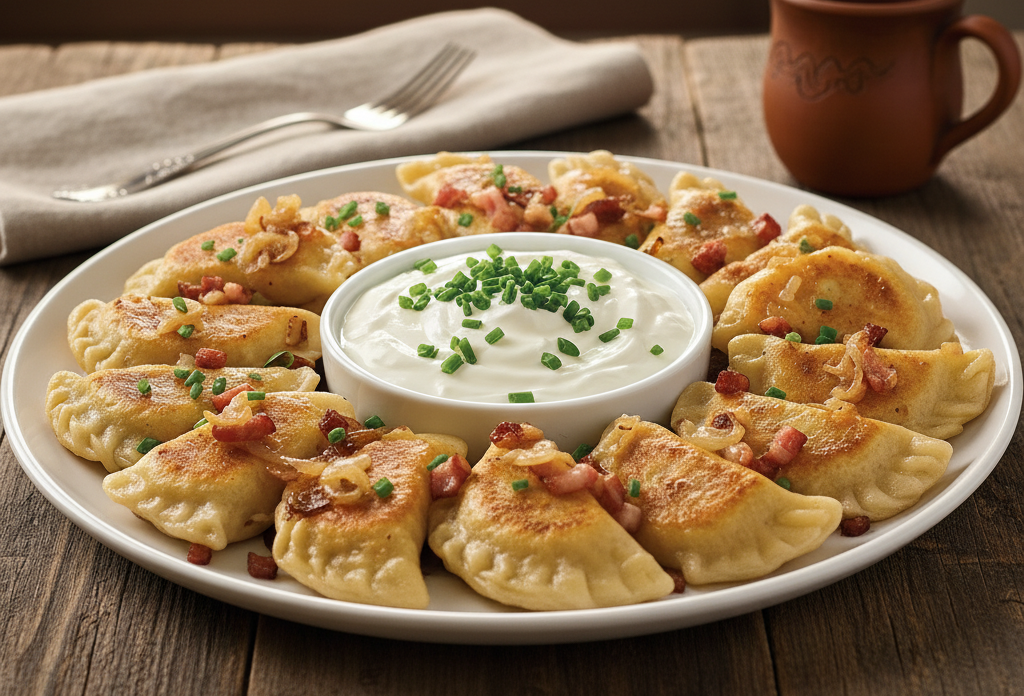
No Polish food list would be complete without pierogi — the country’s most famous dumplings. We tasted every kind we could find, from classic savory to sweet. Although better than anything you can buy in North America, they still didn’t quite measure up to my mom’s — her pierogi were the gold standard. But enjoying them here was a beautiful way to remember her, and to celebrate the delicious tradition she passed down.
- Pierogi ruskie (PYEH-roh-ghee ROOS-kee-eh): Filled with potatoes, cheese, and onions — a classic!
- Pierogi z mięsem (PYEH-roh-ghee z myen-sem): Meat-filled dumplings for the carnivores.
- Pierogi z kapustą i grzybami (PYEH-roh-ghee z kah-POOS-too ee GZHIH-bah-mee): Sauerkraut and mushroom, perfect for vegetarians.
- Sweet pierogi with blueberries or strawberries, topped with cream or powdered sugar, make for a perfect dessert (our tween’s favorite)
You can find pierogi served in cozy restaurants or as quick street food. Tip: Don’t miss trying them with a dollop of sour cream!
Want to dive deeper? Try a Pierogi Cooking Class where you’ll learn to make them from scratch. A fun way to experience Polish food culture first hand.
Polish Street Food
Polish food isn’t just about sit-down meals — some of the best bites come from market stalls, late-night carts, or tiny walk-up windows. Whether you’re wandering Kraków’s Old Town or waiting for a train, these quick eats are part of everyday Polish life.
1. Zapiekanka (Zah-Pyeh-KAHN-Kah)
I’d been dying to try zapiekanki ever since I first heard about them — imagine a long baguette, toasted until crisp, then topped with sautéed mushrooms, gooey melted cheese, and a drizzle of tangy ketchup. It’s Poland’s version of street pizza: simple, crunchy, and wildly nostalgic. The ones from Plac Nowy in Kraków are legendary, and yes, it’s totally acceptable to eat them for breakfast, lunch, or a midnight snack.
2. Kielbasa z grilla (Kyeow-BAH-sah Z GRI-lah)
A smoky grilled sausage, served with a slice of bread and a dollop of mustard. You’ll smell it before you see it — the scent of sizzling sausage drifts through fairs and outdoor markets all over Poland. It’s hearty, unfussy, and hits the spot every time.
3. Obwarzanek krakowski (Ob-Vah-ZHAH-Neck Kra-KOFF-Skee)
Kraków’s twisty answer to the bagel. Golden, chewy, and sprinkled with sesame, salt, or poppy seeds, these are sold from blue rolling carts across the city. They’re the perfect on-the-go snack for exploring — and kids love them.
🍰 Desserts
After all that savory richness, Poland’s desserts are a sweet reward — simple, not overly sugary, but full of nostalgia.
1. Pączki (PONCH-Kee)

Polish doughnuts that put all others to shame — soft, pillowy, and fried to golden perfection, then filled with everything from classic rose jam to rich custards and fruit preserves. In Polish bakeries, you’ll find an endless lineup of flavors, from traditional to creative twists. We couldn’t resist trying mango passionfruit, salted caramel, and Dubai chocolate — each one absolutely delicious. Lightly dusted with powdered sugar or glazed, pączki are impossible to eat just one of… and honestly, why would you want to?
2. Sernik (SEHR-Nyeek)
Polish cheesecake made with twaróg (a farmer’s cheese). Dense, creamy, and lightly sweet — especially popular in Kraków.
3. Szarlotka (Shar-LOHT-Kah)
Polish apple pie, layered with spiced apples and crumbly pastry. Less sweet than the North American version — and absolutely perfect with a scoop of vanilla ice cream.
| Syps Family Polish Foodie Tip Box 🥟 Where to eat: Try local milk bars (bar mleczny, BAR MLEHCH-nih) for affordable, authentic Polish meals. 🥟 Ordering tip: Smile and say “Dziękuję” (jen-KOO-yeh) — that’s “thank you” in Polish and always appreciated! 🥟 Portions are generous. Seriously. You don’t need a starter and a soup and a main — but you’ll probably order them anyway. 🥟 Try seasonal dishes. Chłodnik and oscypek are best in summer, while bigos and żurek shine in winter. 🥟 Go early: For zapiekanka stalls and pączki bakeries, arrive before peak hours for the freshest bites. 🥟 Vegetarian friendly: Pierogi and bigos have vegetarian options, so don’t worry if you don’t eat meat. |
The Syp’s Survival Summary
Did we survive the pierogi overload? Yes – tasting every kind from classic potato-cheese to the wild blueberry sweets without regrets. We braved the rich and smoky bigos stew that could fuel a marathon (or at least a very long walk through the Old Town). We conquered the cheesy zapiekanka street pizzas one bite at a time, and yes, we joyfully devoured more pączki than any one person probably should admit to.
But we have to be honest — we did not survive the flaki (FLAH-kee), the traditional tripe soup. That one was definitely an acquired taste, and not one our family was quite ready for!
Poland was a delicious family Polish food marathon that filled our bellies, warmed our hearts, and made new memories — all while honoring the tastes and traditions that connect us across time and place. Poland’s food scene isn’t just a meal; it’s a shared adventure. And the best part? We lived to tell the tasty tale.