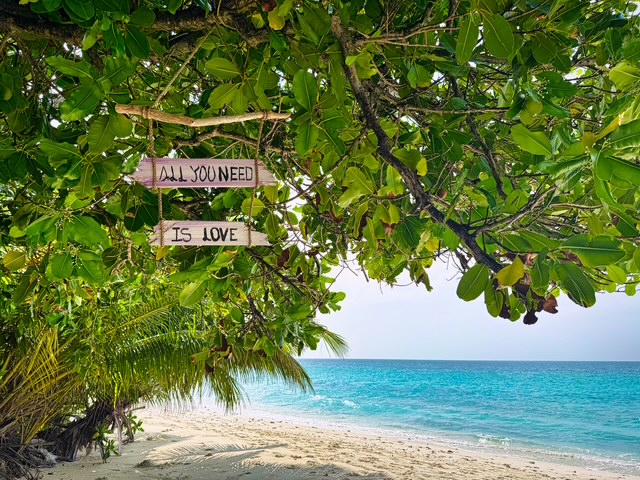
When you picture the Maldives, chances are you imagine infinity pools, overwater bungalows, and someone delivering champagne by canoe.
Our days in Dhigurah looked a little different—and honestly? I wouldn’t have traded them for the world.
Staying on a local island gave us something far better than luxury theatrics: slow mornings, salty hair, family time, and a rhythm that felt wonderfully unscheduled. This is what a typical day in Dhigurah actually looked like for us—part paradise, part comedy, and 100% unforgettable.
Some links here are affiliate links. If you buy something, I might earn a small commission—thanks for supporting my blog! I only share products I use and stand behind.
Sunrise: The Early Bird Gets Both Coasts
Dhigurah is only about 300 meters across, which means something magical: you can catch both sunrise and sunset without ever leaving the island. If you’re an early riser, sunrise rolls in around 6:00 a.m., and it feels almost criminal to miss it.
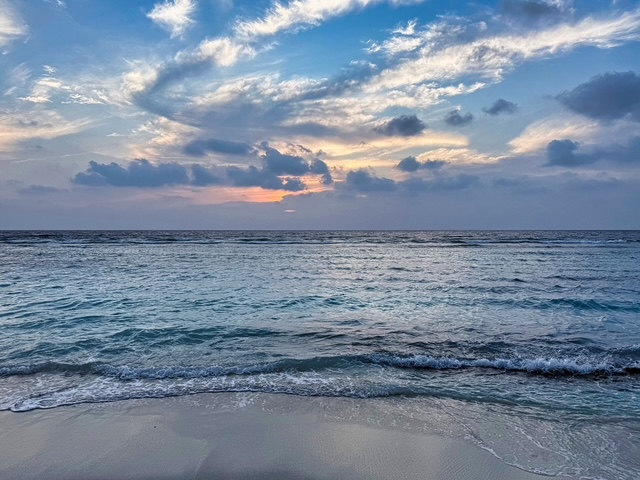
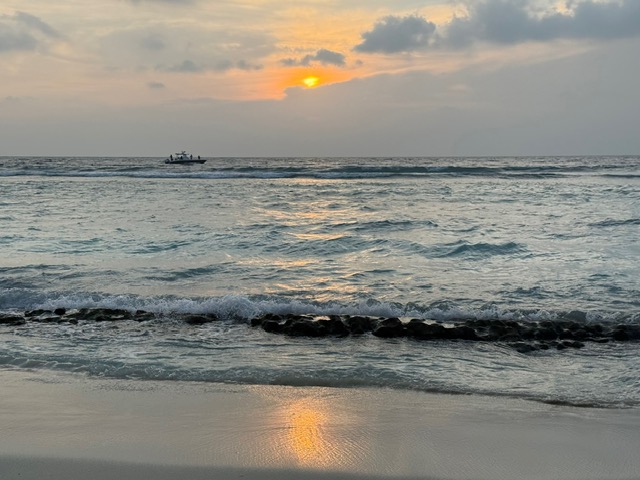
I rolled out of bed—hair everywhere, barefoot and half-awake—and wandered straight to the beach. Watching the sky turn pink and gold with absolutely no one else around felt like the Maldives had pressed pause just for me.
Pro tips:
- Bring coffee. Sunrise is stunning… but also very early.
- Leave moody teen in bed unless you want you want your head bitten off before 6 am. Some family members are better appreciated later in the morning.
Breakfast: Tuna, Roti & Pleasant Surprises
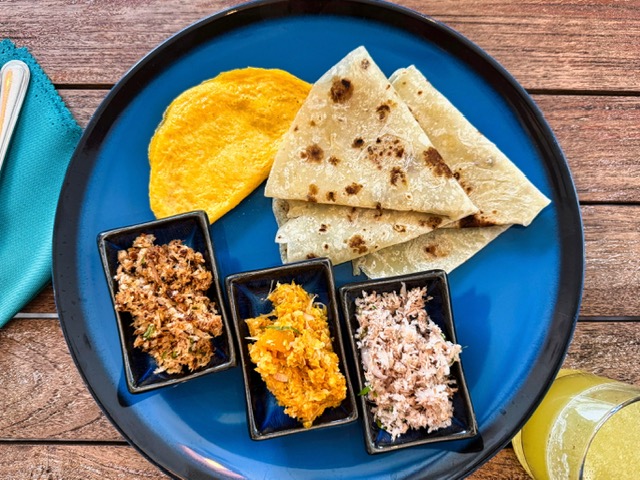
Breakfast was included with our hotel stay, so each morning we wandered down together as a family. Every day featured something different—and every day was delicious.
The biggest surprise? Maldivian breakfast.
Mas Huni (yes, that’s the name) is a traditional dish made of tuna, coconut, onion, and chili, served with warm roti. There were usually three different tuna preparations, and somehow… I loved all of them. I did not see that coming.
Fueled up, it was time for sunscreen, packing bags, and deciding how the day would unfold.
Mornings: Choose Your Own Island Adventure
Our mornings followed a simple rule: pick one main activity and enjoy it fully.
Our three rotating options were:
- Regular beach day
- Sandbar day
- Excursion day
That choice alone shaped the entire morning—and we never felt rushed.
Regular Beach Days

These were slow, salty, and perfect. Swimming, sunning, snorkeling, occasional kayaking, and a lot of floating while doing absolutely nothing.
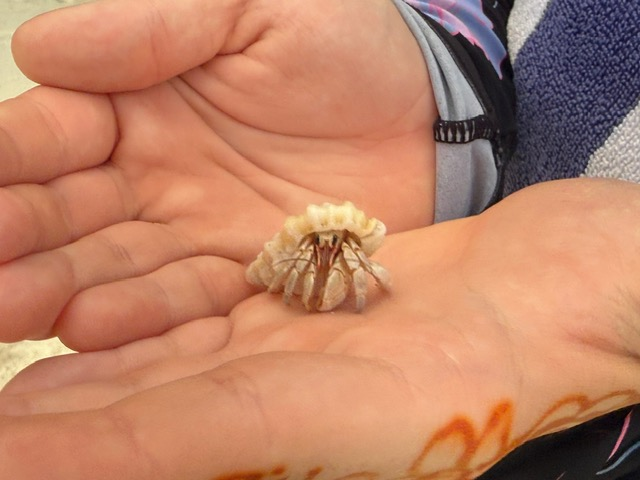
Our daughter became deeply invested in hermit crab collecting (don’t worry—temporary). They were everywhere. We even raced them, which is exactly as chaotic and hilarious as it sounds.
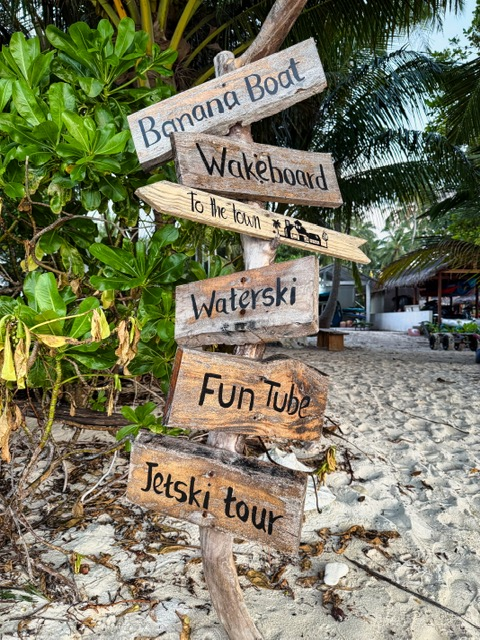
There are also other water sports available—jet skis, SUPs, kayaking—but honestly, the beach itself was more than enough.
Sandbar Days (The Reason People Come to Dhigurah)
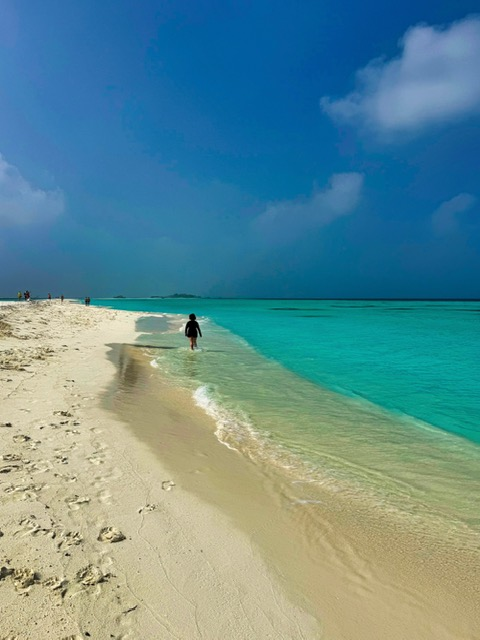
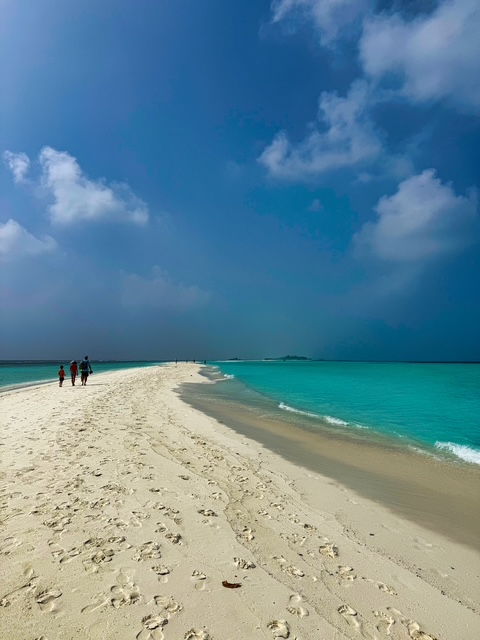
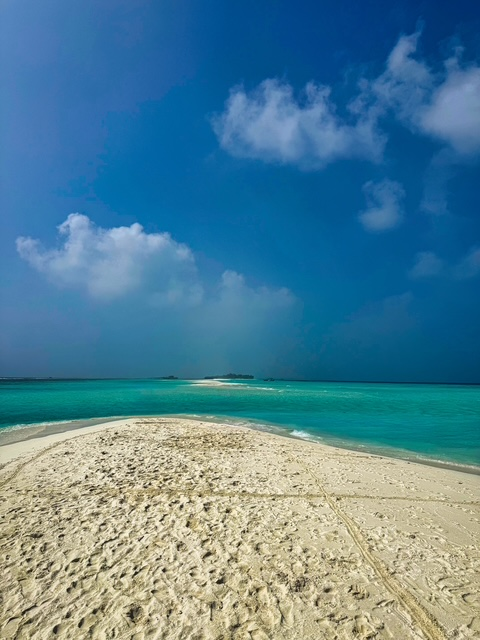
The sandbar is legendary—and worth every bit of hype.
It’s about a 40-minute walk either along the beach or through the interior “jungle.”
- The jungle route = more shade, more mosquitoes
- You can rent a bike ($5-$8)or scooter ($20) to cut the time in half. Note: island bikes live a hard life—salt and sand aren’t kind, so expect some rust and the occasional loose bolt or flat tire.
- Most hotels offer a buggy ride (about $10 each way)
The sandbar itself is unreal: blinding white sand, crystal-clear water, and the ability to walk straight into the ocean like you’re in a postcard.
Just be sure to check tide schedules—timing matters.
Excursion Days
Excursions were mostly snorkeling-based, with options like:
- Sea turtle snorkeling
- Manta ray snorkeling
- Whale shark snorkeling
- Nurse shark snorkeling
Evening fishing trips are also available—and if you catch something, you can pay to have it cooked for dinner (assuming the fish cooperate). Scuba Diving is also available for those who are certified.
We opted for the whale shark snorkeling tour, fully aware that sightings are never guaranteed. While the gentle giants didn’t make an appearance for us, the morning was far from a letdown. We spotted manta rays gliding through the water and snorkeled a stunning reef teeming with colorful fish, making it one of those days where the journey easily matched the goal.
Late Lunch & Afternoon Reset
After a long morning in the sun, we’d come back for a late lunch, usually something local and spicy enough to wake up every taste bud.
Afternoons in Dhigurah were all about cooling off from the heat of the day. Sometimes that meant retreating to the air-conditioned room for showers and downtime. Other days, we’d take a slow walk through town, popping into small shops, grabbing snacks, and watching daily island life unfold around us.
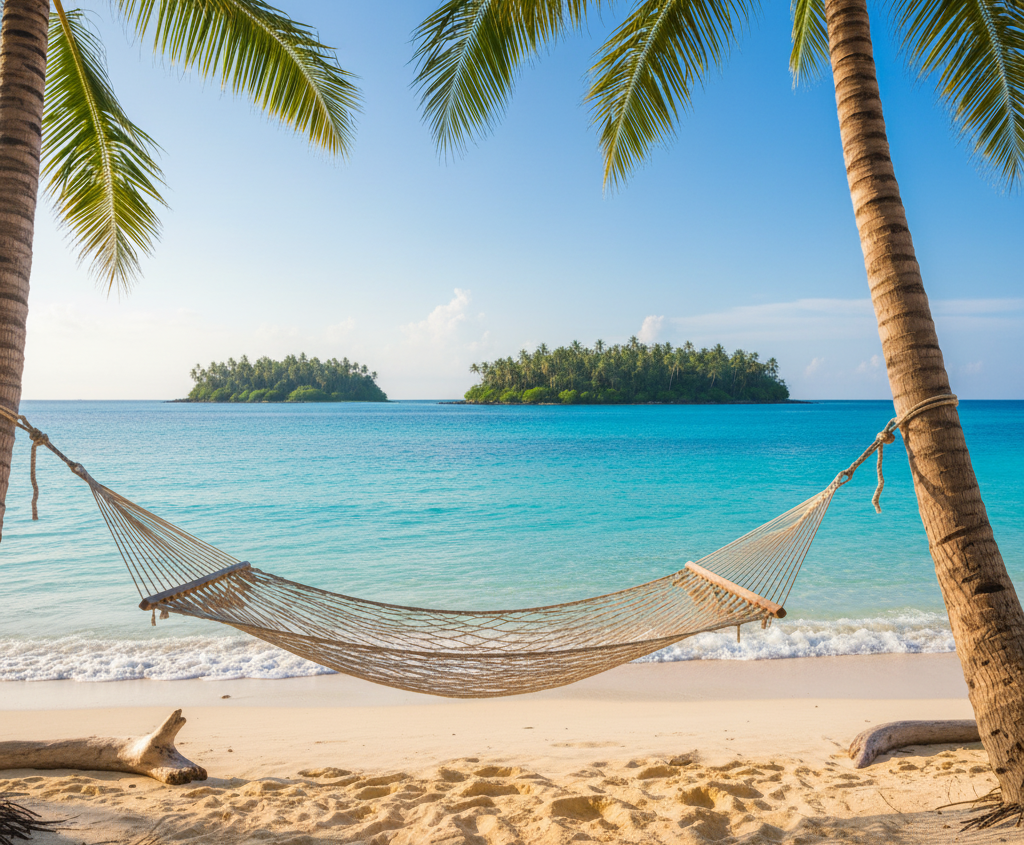
On quieter afternoons, I’d curl up with a book in the hammock on our balcony, ocean breeze drifting through, fully embracing the art of doing absolutely nothing. Dhigurah has a way of gently reminding you that rest isn’t wasted time—it’s part of the experience.
Sunset: Island-Wide Event
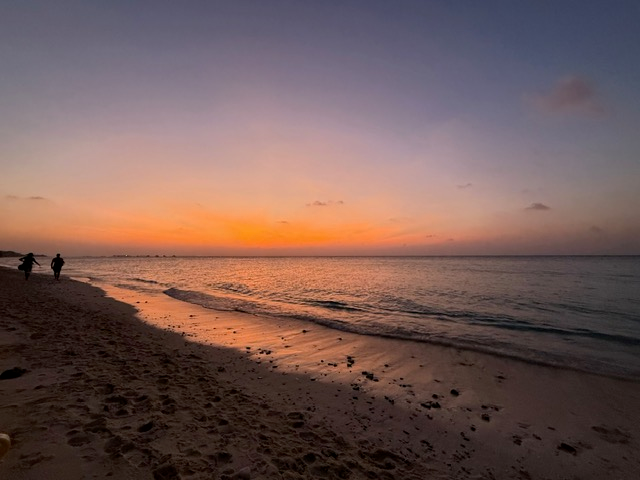
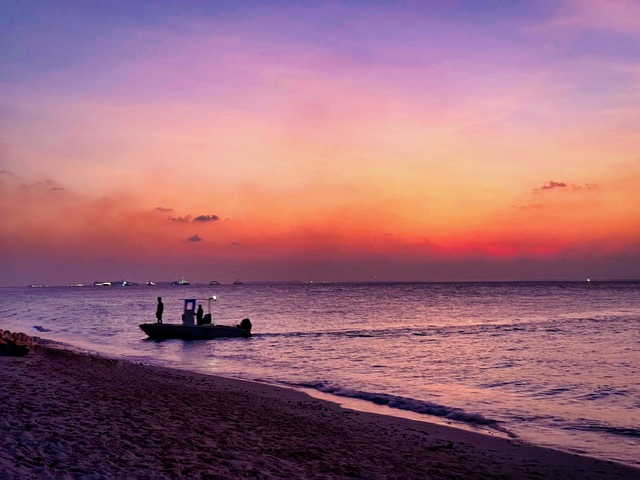
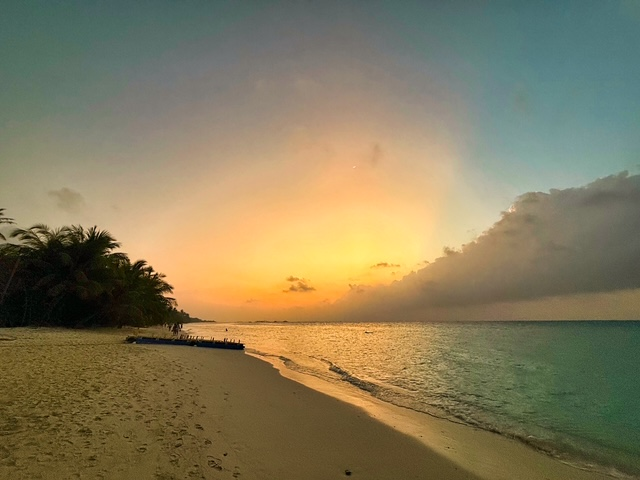
Sunset in Dhigurah feels like a quiet, communal ritual. Locals and visitors drift toward the beach as the sky turns fiery orange.
We’d walk the sandbar until it disappeared beneath the tide, watching the sea gently erase our footprints. It was one of those moments where you forget your phone exists—though yes, I still took about 45 photos.
Dinner, Cards & Zero Screen Time
Evenings were simple: dinner, then cards. Lots of cards. With no nightlife and nowhere to be, we bonded as a family in a way that felt increasingly rare—no screens, no distractions, just us.
Night: Stars, Silence & Early Bedtimes
When night falls, Dhigurah quiets down completely. No bars. No crowds. Just the sound of the ocean and a sky overflowing with stars.
We’d go for a slow evening walk, the island softly lit and blissfully dark. With so little light pollution, the stars felt less like decoration and more like beacons—bright, sharp, and impossible to ignore. On especially dark nights, you might even get lucky and spot bioluminescent plankton—tiny organisms that glow electric blue when the water is disturbed, sometimes turning the shoreline into a real-life “sea of stars.”
We weren’t lucky enough to see it ourselves, but knowing it can happen there only added to the quiet magic of those walks.
After that, it was an early night—usually lights out by 10 p.m.—so we could wake up and do it all again the next day: sunrise, beach, water, repeat.
Who needs nightlife when you’ve got a galaxy overhead?
| Syps Family Dhigurah Travel Tip Box 💡Wake up for sunrise: It’s worth the early alarm (pack instant coffee). 💡Bring reef-safe sunscreen & a rash guard: The sun here does not play. 💡Book tours through your guesthouse: Whale sharks, snorkeling, sandbank trips—they’ll organize everything. 💡Respect local customs: Modest clothing in the village, bikinis only on the designated beach. 💡Embrace the slow pace: Dhigurah runs on island time—don’t fight it. |
The Syps Survival Summary
Did we survive a typical day in Dhigurah? Yes—beautifully.
With no landmarks to chase and no schedules to keep, our days revolved around sunrise walks, beach choices, slow meals, salty hair, and family time. Dhigurah gave each of us space to enjoy the island in our own way—whether that meant endless snorkeling, long stretches of sun and reading with the occasional dip or kayak, or happily bouncing between land and sea.
It wasn’t about luxury or checking boxes. It was about slowing down together, laughing at the little moments, and realizing that paradise doesn’t need an itinerary—just time, water, and the people you’re sharing it with.