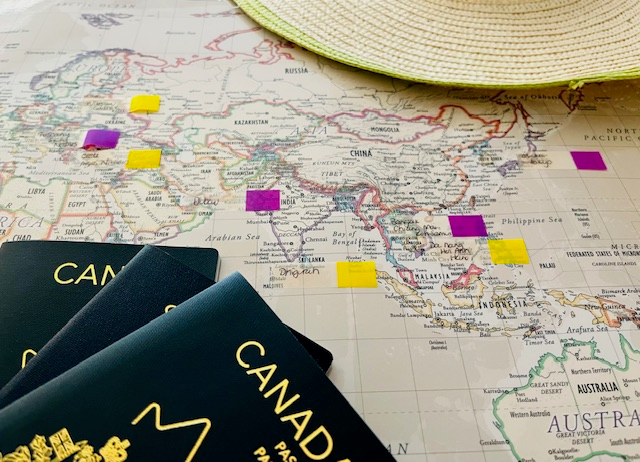
Planning a family gap year sounds magical—and it is—but it’s also a huge undertaking, especially when you’re traveling with a strong-willed tween (like we are!). Before we left, we spent months planning, researching, and organizing everything from curriculum to currency conversions.
Now that we’re ready and about to embark on this adventure, here are the 7 biggest things we think anyone planning long-term family travel should consider—and how we approached each one.
Some links here are affiliate links. If you buy something, I might earn a small commission—thanks for supporting my blog! I only share products I use and stand behind.
1. Budget Realistically (and Let Cost of Living Guide You)
One of the first things we had to wrap our heads around was: how much does a year of travel actually cost? Spoiler: it depends entirely on where you go and how you travel.
For us, budget planning wasn’t just about what we could afford—it helped us choose our destinations and how long we stayed in each one. We prioritized places with a lower cost of living, like Vietnam and Thailand, which allowed us to stretch our budget without sacrificing comfort or experience.
To give you an idea, in Vietnam, you can regularly eat delicious, fresh, local meals for less than $10 a day per person—sometimes even less! Street food here isn’t just affordable, it’s incredible.
We also use a travel budgeting spreadsheet to track expenses and always leave a buffer for the unexpected.
2. Let Visa Rules Shape Your Route
Visa logistics played a much bigger role than we initially expected. We quickly realized that managing long-term visas for multiple countries could get complicated (and expensive).
So we made it a goal to stick to countries where Canadians either don’t need a visa or could get one on arrival. This kept our travel plans much simpler and gave us more flexibility.
The only exception was Vietnam, which requires an eVisa. Fortunately, the process was super straightforward. We applied online, uploaded a photo, paid the fee, and got our approved visa by email a few days later. Easy.
3. Stay on Top of Health and Vaccines
Before we left, we booked appointments with our family doctor and a travel clinic to make sure all our regular vaccines were up-to-date and to get the extras recommended for the regions we’re visiting.
Some destinations in Southeast Asia, for example, require (or strongly recommend) vaccines like Hepatitis A, Typhoid, or Japanese Encephalitis, depending on how long you’ll be staying and where you’ll be traveling. We also packed a small “family pharmacy” with basics like fever reducers, motion sickness meds, and rehydration salts—because no one wants to waste precious travel days hunting down children’s Tylenol in a foreign country.
We also checked if we’d need proof of vaccination (like Yellow Fever for certain countries) since some borders can require it for entry.
It felt like a lot at the time, but getting this sorted before we left has given us real peace of mind on the road.
4. Have a Solid School Plan (and Be Flexible)
We knew that taking our daughter out of school for a year was a big deal, so we didn’t wing it. We registered with a recognized homeschool provider in our home province to ensure we met education requirements and kept our daughter on track for a smooth re-entry when we return.
Before we left, I (Mom) went through the curriculum and planned out lessons in advance. We use a combination of:
- Online platforms (especially for subjects like math)
- Traditional homeschooling, led by me
- Real-world learning (this year’s Social Studies unit covers Renaissance Europe—how lucky is that?!) – I was able to choose “fieldtrips” that aligned with her curriculum.
It’s a flexible but intentional approach that lets us prioritize learning and living. And yes, sometimes school happens at the beach.
5. Get Travel Insurance—Just Do It
This isn’t the most exciting part of travel planning, but it’s non-negotiable. From minor illnesses to more serious emergencies, you want to be covered—especially with kids in the mix.
We chose a travel insurance plan that covers medical care, hospital visits, prescriptions, and trip interruption.
Don’t skip this step. It’s worth every penny.
6. Pack Light—Seriously
When you’re moving from place to place over months, your luggage becomes your life. We started with the idea of being a “Team Backpack” family… and then reality hit. We’re in our 40s, we’ve got some back-and-knee quirks, and walking long distances with backpacks quickly lost its appeal.
Luckily, we returned the packs within the return window (great backpacks—just not for us). We now use light rolling suitcases and packing cubes, and keep clothing minimal, versatile, and comfortable.
The best part? You can always buy things as you go.
Want more on how we figured out our luggage situation?
- The Great Backpack Delusion: Why the dream of traveling light didn’t quite match our reality
- To Check or Not to Check?: Our take on checking bags vs. carrying on—and what works best for family travel
7. Plan Ahead—But Leave Room for Magic
Long-term travel with a family definitely requires planning. You need a rough itinerary, confirmed accommodation, and a plan for school, healthcare, and banking.
But don’t overplan every single moment. The beauty of a gap year is being able to slow down, adjust, and follow your curiosity.
We’ve could extended stays in places we love, skip stops we aren’t feeling, and take spontaneous detours that turn out to be highlights of the trip. Flexibility is part of the joy.
The Syps Survival Summary
Planning a family gap year isn’t easy—but it’s also not impossible. With a bit of research, a lot of intention, and a willingness to go with the flow, you can turn this dream into your reality.
We survived the spreadsheets, the overthinking, and the “what ifs” – and we’re still speaking to each other, so we’re calling that a win.
It’s not always glamorous, but it’s always worth it.