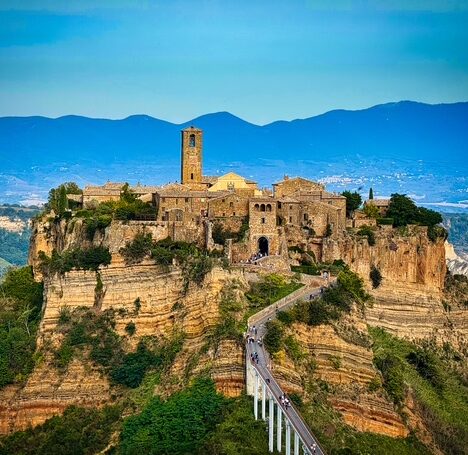
I wasn’t planning to write a full post about Civita di Bagnoregio (pronounced CHEE-vee-tah dee bah-nyo-REH-joh).— it was supposed to be a quick stop on one of our bigger day trips. But honestly, this place is too cool not to give it its own spotlight.
Perched atop a crumbling hill of volcanic rock and clay, Civita di Bagnoregio has earned its nickname “the Dying City.” It’s called that because, quite literally, the town is disappearing. Erosion and landslides have been slowly eating away at the cliffs that support it for centuries. Roads have collapsed, and parts of the town have fallen into the valley below. The shifting land makes it impossible to expand or modernize.
Today, only a handful of residents live here year-round — fewer than a dozen, depending on the season. The rest of the ancient homes have been turned into small inns, cafés, or summer getaways. Cars can’t reach Civita, and everything from groceries to building materials must be carried across the footbridge.
That said, it’s perfectly safe to visit — the structure of the city is constantly monitored and maintained. So while it may be called the “Dying City,” you’re not in any danger of it collapsing under your feet. It’s beautiful, peaceful, and fragile — a living relic clinging to the edge of history.
Some links here are affiliate links. If you buy something, I might earn a small commission—thanks for supporting my blog! I only share products I use and stand behind.
Quick Italian Lesson
Italian pronunciation might look tricky, but once you know a few simple rules, it’s surprisingly logical:
| 🇮🇹 C’s: C + i / e → sounds like “ch” in cheese (e.g., Civita → CHEE-vee-tah) C + a / o / u → sounds like a hard “k” (e.g., Colosseum → ko-loh-SEE-um) SC + i / e → sounds like “sh” (e.g., scena → SHAY-nah) CC + i / e → a double “ch” sound (e.g., boccia → BOH-chah) CH + i / e → sounds like a hard “k” (e.g., chianti → kee-AHN-tee) |
| 🇮🇹 G’s: G + i / e → sounds like “j” (e.g., gelato → jeh-LAH-toh) G + a / o / u → sounds like hard “g” in go (e.g., gatto → GAH-toh) GL → sounds like the soft “lli” in million (e.g., famiglia → fa-MEEL-ya) GN → sounds like the Spanish ñ or ny in canyon (e.g., Bagnoregio → bah-nyo-REH-joh) |
So now you can say Civita di Bagnoregio like a local — and impress everyone when you do! 🇮🇹✨
Getting to Civita di Bagnoregio
Civita di Bagnoregio is in northern Lazio, near the Umbrian border. It’s about 30 minutes from Orvieto and an easy addition to any central Italy trip. You’ll park in the modern town of Bagnoregio, at one of the paid lots near the Belvedere viewpoint. From there, it’s roughly a 10-minute walk through town followed by another 10-minute walk across the footbridge that connects the “living” town to the dying one. If you don’t have a car, there are day trips that you can book that will provide you transportation by bus.
The Walk In to Civita di Bagnoregio
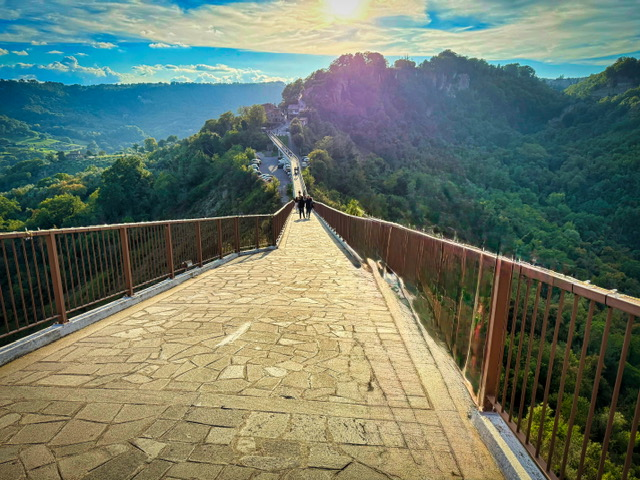
Our tween, ever the dramatist, took one look at the steep bridge and declared it’s called the Dying City because she’d die walking there. (She didn’t.) The climb is steady but manageable, and the reward is stunning views of the Calanchi Valley — a surreal, almost lunar landscape of cliffs and hills.
Inside the Dying City
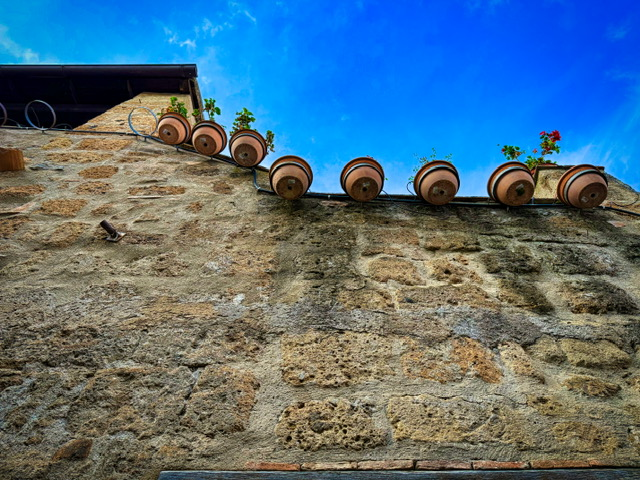
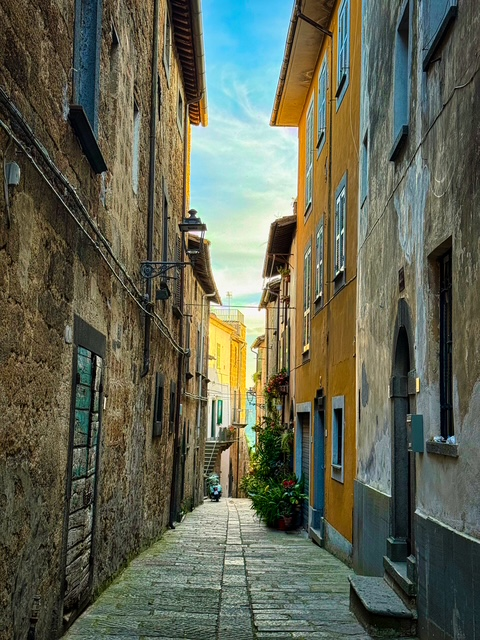
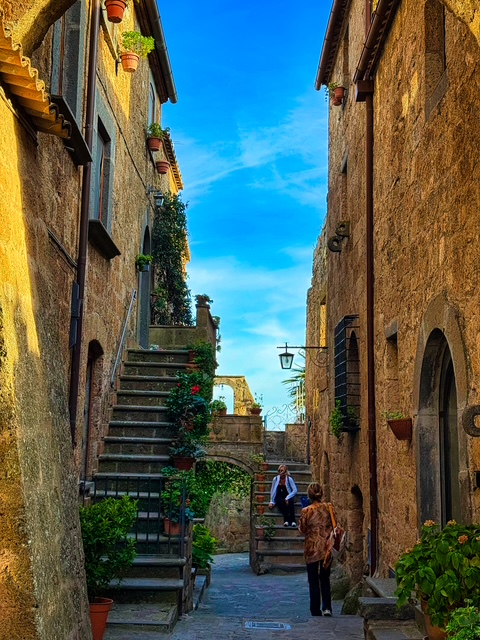
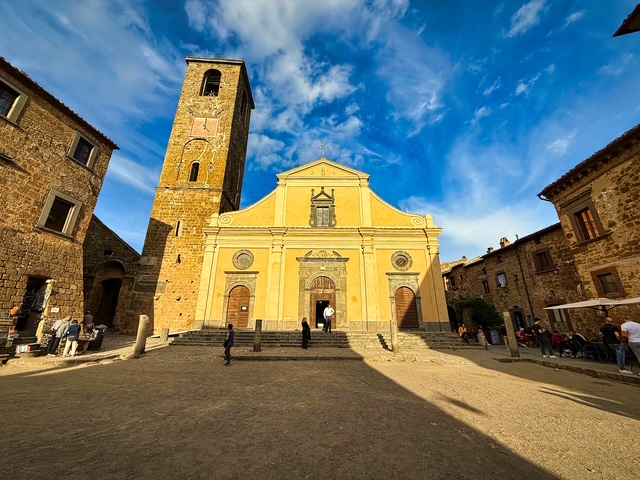
Once you pass under the ancient stone archway, you step into another world. Time slows down here — no traffic, no noise, just stone pathways lined with flowers and quiet piazzas that echo with history. Though the town’s population has dwindled, Civita is far from deserted. A few cafés, shops, and trattorias bring life to the narrow lanes. You can even stay overnight in a B&B or boutique inn to experience its magic after the crowds leave.
Where to Stay & Eat
If you’re tempted to linger, Corte della Maestà is a stunning boutique stay with antique-filled rooms and incredible views.
For a drink or quick bite, try Alma Civita Ristorante, which has an unbeatable terrace overlooking the valley — the perfect spot to reward yourself (and your overdramatic children) after the trek in.
Pair It With
Civita pairs perfectly with a visit to Orvieto, just 30 minutes away. Explore Orvieto’s duomo, underground tunnels, and St. Patrick’s Well in the morning, then spend the afternoon wandering the quiet lanes of Civita.
👉 Read our full post on Orvieto: 5 Must-Do Things When Visiting Orvieto: Umbria’s Cliffside Gem for everything you need to plan your visit — from what to see underground to where to find the best views over Umbria.
| Syp’s Family Civita di Bagnoregio Tip Box 🏛 Getting There: Park in Bagnoregio and walk about 10 minutes through town, then another 10 minutes over the footbridge. Wear comfy shoes — it’s uphill on the way in. 🏛 Tickets: There’s a small entrance fee to cross into Civita (a few euros, payable before the bridge). 🏛 Safety: Despite its nickname, Civita is well maintained and structurally monitored — it’s completely safe to visit. 🏛 Best Time to Visit: Early morning or late afternoon when the crowds thin out and the light is golden. 🏛 Combine With: Orvieto — it’s an easy and scenic drive away. |
The Syps Survival Summary
Did we survive the footbridge into the dying city? Yes!
Despite tween theatrics and dramatic proclamations of impending doom, we made it — and it wasn’t bad at all. The walk took about 20 minutes total, and the sweeping views more than made up for the climb. Civita di Bagnoregio might be called the Dying City, but standing there, surrounded by ancient stone and endless sky, it feels vibrantly alive. Definitely worth the detour.
Comments
One response to “Civita di Bagnoregio – The Dying City That Refuses to Die”
I can’t believe people live here