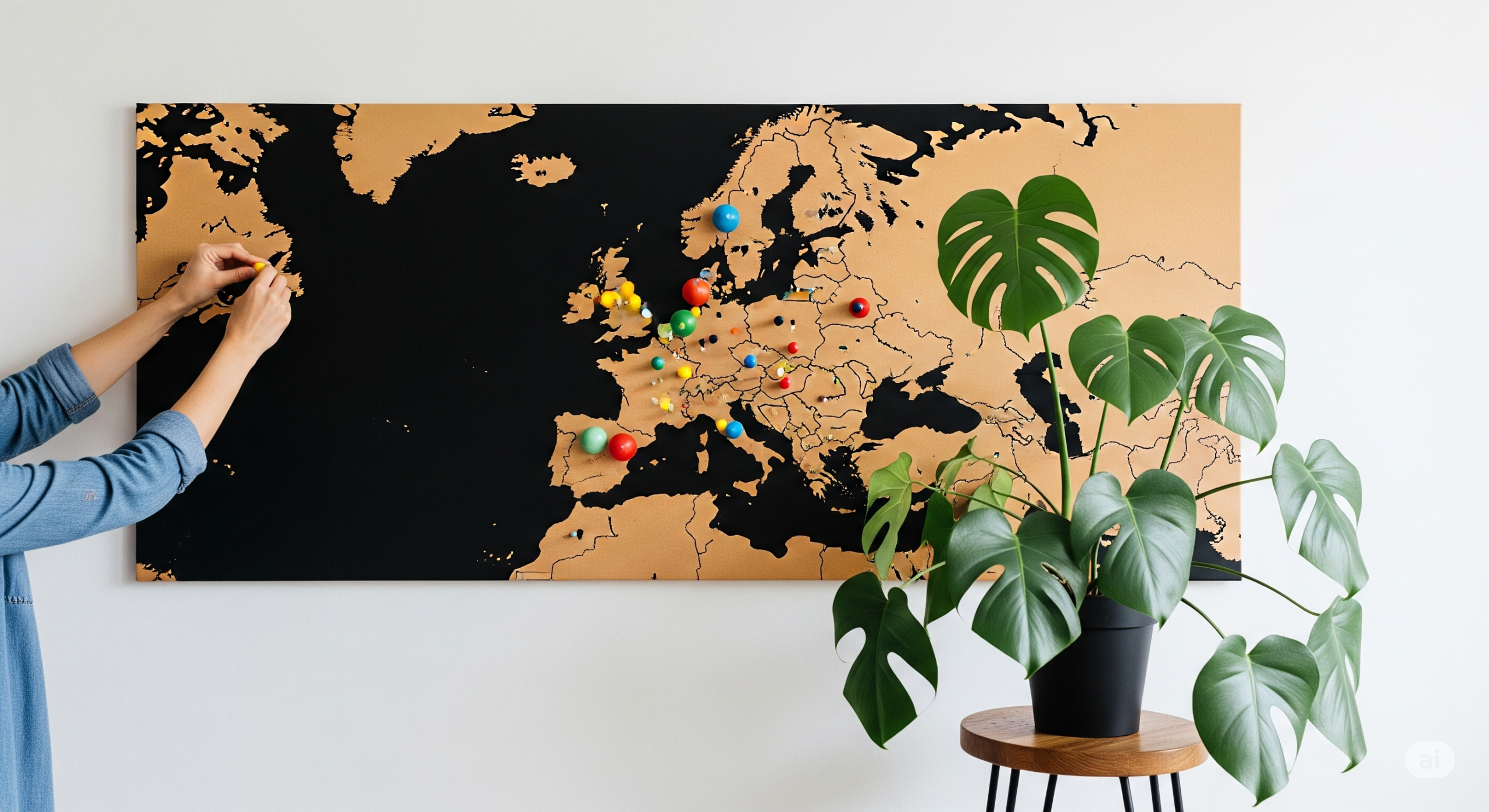
Planning a family gap year can be both exciting and overwhelming — especially when you want to make sure everyone’s travel dreams are included. As a family of three, we set out to create the perfect travel route that balances our interests, practical travel logistics, budget considerations, and the chance to explore amazing new destinations. Here’s how we chose our family gap year travel route planning, step-by-step, and some helpful tips if you’re planning your own family adventure.
Some links here are affiliate links. If you buy something, I might earn a small commission—thanks for supporting my blog! I only share products I use and stand behind.
Step 1: Creating Individual Wishlists
We each started by making our own travel wishlists. My husband’s top pick was Italy — a country famous for its art, history, world-class cuisine, and warm Mediterranean climate. Our daughter was drawn to Japan, fascinated by its unique culture, bustling cities, and delicious food like sushi and ramen. For me, the Maldives was a dream destination, offering stunning beaches and crystal-clear ocean waters — perfect for relaxing and reconnecting with nature.
Of course, Poland was a no-brainer for us to include since it’s where our family roots are. Visiting places that connect us to our heritage was important to all of us.
Step 2: Narrowing Down Destinations for the Ideal Route
With our wishlists in hand, the next step was to narrow down destinations and build a logical travel route. We decided to chase warmth whenever possible — spending time in places with comfortable, sunny weather to avoid harsh winters or rainy seasons.
We ultimately chose to focus on Europe and Southeast Asia because they offer a wonderful blend of culture, history, diverse cuisines, and beach destinations. Plus, both regions have relatively well-connected flight networks, which makes moving between countries easier for a family on the go.
Traveling from west to east helped us avoid backtracking, saving time and money. This route planning strategy is key for any long-term travel itinerary to maximize efficiency and reduce travel fatigue.
Step 3: Budget and Cost of Living Considerations
Budget was an important factor in shaping our route. We looked for destinations where the cost of living was more favorable. For example, as a family of three in Vietnam, we found we could eat well for less than $20 CAD a day. This allowed us to stay longer and stretch our travel budget without giving up comfort or experiences. Including countries with affordable day-to-day expenses helped balance the higher costs of some dream destinations. Overall, this made our trip more sustainable for the whole family.
Step 4: Considering Visas and Vaccinations
Before finalizing our itinerary, we carefully researched visa requirements and vaccine recommendations for each country on our list. This is a crucial step for any family gap year planning — it helps avoid surprises and ensures smooth border crossings and safe travel.
Countries with complicated visa processes or extensive vaccine mandates were crossed off our initial list. We recommend consulting your government’s travel webpage for up-to-date vaccine recommendations and, if needed, booking a consultation with your local travel clinic. As Canadians, we use the Government of Canada Travel Health and Safety page as our trusted source.
Step 5: Building in Flexibility
We wanted to keep our itinerary flexible, so we planned for opportunities to take short weekend flights to nearby cities or countries if the mood strikes us. This flexibility lets us be spontaneous and add new experiences as we go, which is one of the best parts of a gap year!
Our Shared Loves: Food and the Ocean
One of the unifying factors for our travel route planning is our love for good food and the ocean. These two themes kept popping up in our conversations and quickly became a guiding compass for building our route.
Food was a big one. My husband will happily spend hours wandering through markets, sampling whatever catches his eye, while our daughter is surprisingly adventurous when it comes to street food. For me, food is about more than eating — it’s about connection. It’s how locals share their culture, and how travelers get an authentic taste of a place.
Take Italy as an example. For us, it’s not just about seeing the Colosseum or the canals of Venice; it’s about sitting down to homemade pasta in a tucked-away trattoria, or joining a gelato-making class in Florence. These are the experiences that stick.
The ocean, meanwhile, offers both adventure and calm. From snorkeling in the Maldives to exploring the islands of Thailand or Greece, water-based destinations gave us space to recharge. After long stretches of sightseeing in big cities, we knew we’d crave downtime by the sea.
Note that snorkeling in the Maldives will be even more fun (and sanitary) with your own Full-Face Snorkel Masks.
And these themes can work anywhere in the world. Imagine a family planning a gap year through Scandinavia with food as the anchor. Their route might include wandering through Copenhagen’s food halls to try Danish smørrebrød, hopping over to Sweden for cinnamon buns (kanelbullar) and meatballs, and then up to Norway for fresh seafood pulled straight from the fjords. Pair that with ferry rides between islands or kayaking along Norway’s rugged coastline, and you’ve got a trip shaped almost entirely by food and water — two passions that become the thread tying everything together.
The key takeaway: figure out what your family consistently loves and let those passions guide your route. It helps narrow choices and makes sure everyone is energized by the journey.
Tips That Apply No Matter Where You Go
The principles we used for our gap year route planning work anywhere — South America, Africa, Australia, or beyond.
Start by making individual wishlists. It ensures everyone feels included and gives you a foundation for your route. In South America, for example, one person might want Machu Picchu, another Patagonia, and someone else Colombia’s colorful cities. Putting those on the table helps you connect the dots.
Next, think about seasons. Weather can shape your whole experience. In South America, you might start in Colombia or Ecuador’s mild tropics, move into Peru and Bolivia during their dry months, then head south for Patagonia’s summer before finishing on Brazil’s beaches.
Keep your budget balanced. Expensive highlights like Galápagos or Patagonia can be offset with affordable stays in Bolivia or Ecuador, where meals and transport are inexpensive. That way, you get bucket-list moments without blowing the budget.
Don’t forget visas and vaccines. In South America, you may need proof of yellow fever vaccination at borders, and visa rules differ between countries — planning ahead avoids surprises.
And finally, aim to minimize backtracking and stay flexible. A route that flows — say, Colombia → Ecuador → Peru → Bolivia → Chile/Argentina → Brazil — saves time and money. Flexibility gives you space to stay longer in places you love or take spontaneous side trips when something exciting comes up.
No matter where you go, the real key is knowing your family’s shared passions — whether that’s food, beaches, hiking, or wildlife — and letting them guide the journey.
The Syp’s Survival Summary
So, how did we survive planning this big family gap year? By blending our individual dreams with practical planning and a healthy dose of flexibility. Destinations were chosen to feed our love for culture, food, and sunshine, all while staying mindful of budget and travel logistics. Embracing the unknown with open arms, we remain ready to adapt and explore.
We don’t want to spoil the route just yet — so follow along and see where this journey takes us next! Because if there’s one thing we’ve learned, it’s that a family gap year is as much about the journey as the destinations.