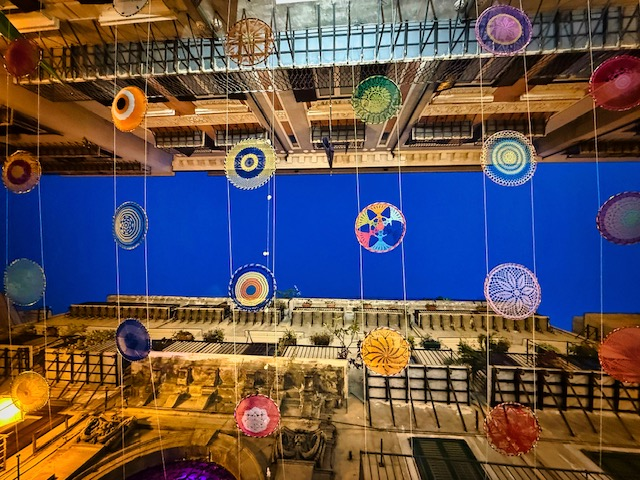
If you’re considering Visiting Palermo, prepare yourself — this isn’t your polished, picture-perfect Sicilian postcard. Palermo is gritty, chaotic, loud, historic, and alive in every possible way. Think: crumbling facades next to golden mosaics, fish markets screaming next to baroque churches. It’s all part of the charm.
We visited during Halloween and All Saints’ weekend, and the city was buzzing — crowds, festivals, dancers, vendors — pure energy everywhere you turned.
We built our own Palermo Walking Tour, starting in the heart of the city and looping through markets, cathedrals, fountains, and the eeriest catacombs you can imagine.
👉 Scroll to the end for the original route
Some links here are affiliate links. If you buy something, I might earn a small commission—thanks for supporting my blog! I only share products I use and stand behind.
A Little History to Set the Scene
Like most of Sicily, Palermo has lived many lives: Phoenician, Greek, Roman, Arab, Norman, Spanish… The architectural mash-up you’ll see walking around hints at that. You’ll feel layers of rule, culture, resilience. The city still bears the scars—and the charm—of that mixture of influences and the wear of time.
Being honest: it felt more “rough around the edges” than other Sicilian cities we’ve visited. Some streets a little grimy, the markets a little chaotic—but that’s part of the personality. Embrace the grit.
Our DIY Palermo Walking Tour
Here’s how we navigated. If you enjoy walking tours, see our post Florence on Foot: Our DIY Renaissance Walking Tour
1. Teatro Massimo (Piazza Verdi)
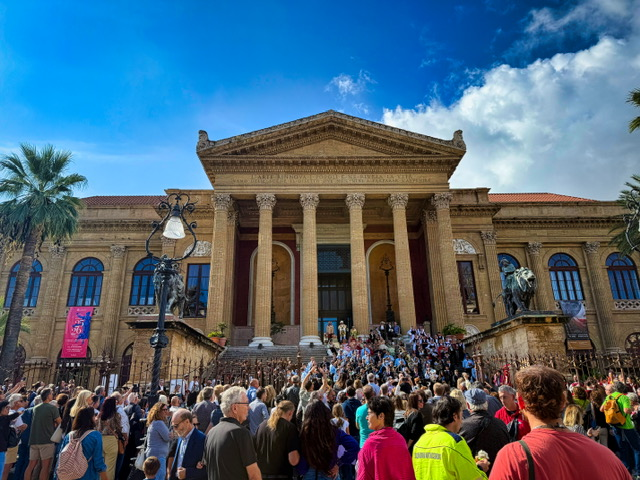
Our tour started here. This is the largest opera house in Italy and the 3rd largest opera house in Europe.
We lucked out: there was a festival happening right there with cultural dances in the piazza. I gave my husband skeptical looks when he insisted we “stay for the ambience,” so we ended up sitting on steps watching dancers. Perfect.
2. Galleria delle Vittorie via the open market of Via Bandiera
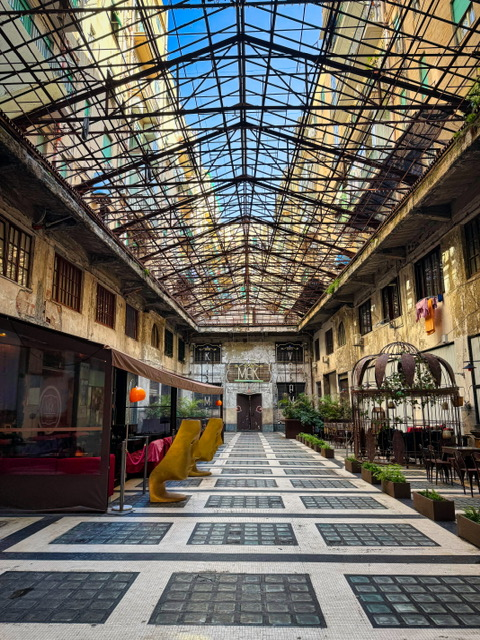
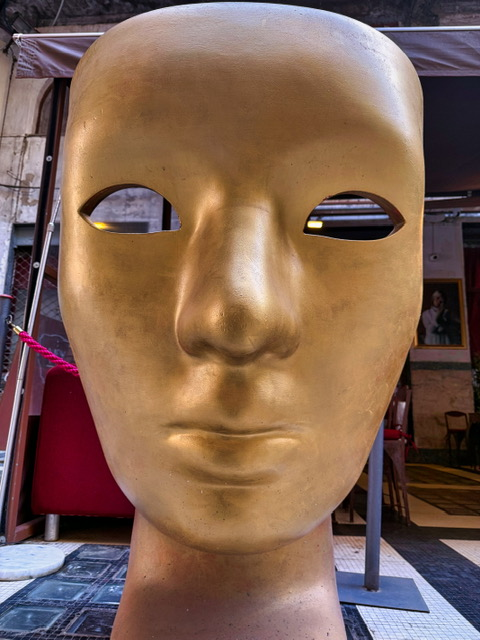
On our walk to the next official stop (the church) we passed through the Galleria delle Vittorie — an elegant covered shopping arcade (think grand glass roof, art-deco/early-20th-century flair) that felt like a polished counterpoint to what came next. Then we plunged into Via Bandiera, an open street-market with vendors yelling, people browsing, the whole energy turning up. That’s when things get “grittier” and lively.
3. Chiesa di San Domenico
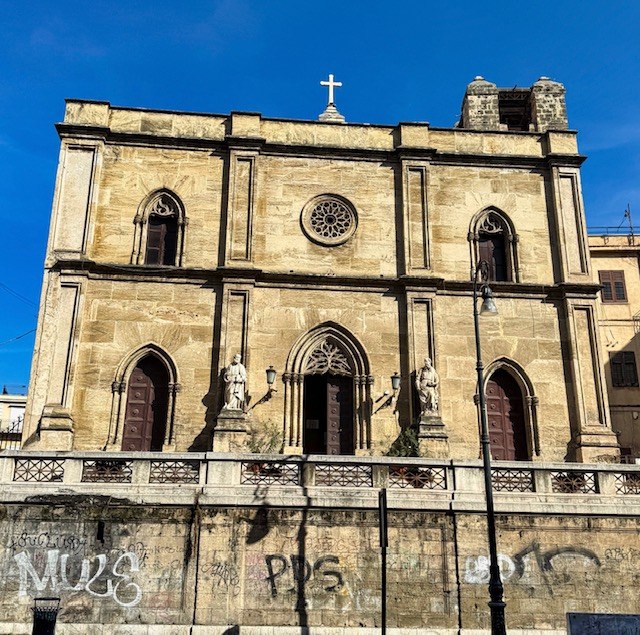
We reached this church and were instantly taken by its quiet beauty — elegant, timeless, and perfectly framed by the bustle around it. It’s worth a quick stop for both the architecture and the atmosphere.
4. La Vucciria
Then came La Vucciria, Palermo’s most legendary street market — and easily the loudest. This market has been around since medieval times, once a hub for meat and fish sellers, now a mix of food stalls, bars, and shouting matches disguised as commerce. They literally yell their wares at you.
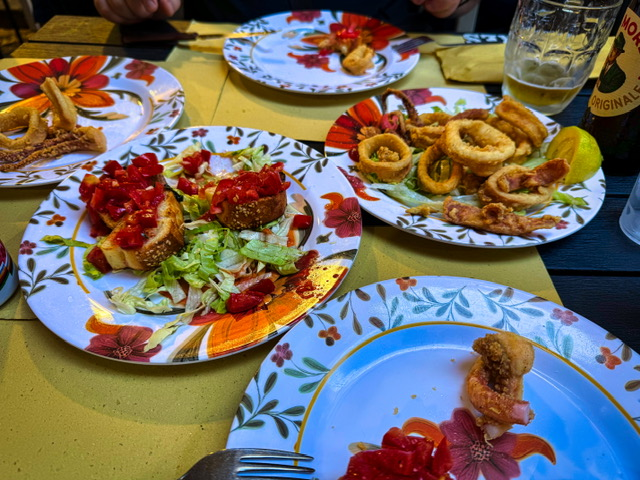
Here’s where we finally stopped for lunch at Alcolisti per Passione (which translates to Alcoholics by Passion 🤷♀️), a bustling spot where locals squeezed in elbow-to-elbow. The seafood was divine — especially the swordfish, a Sicilian specialty. Between the smoky grills and the soundtrack of merchants yelling, it felt like eating inside a movie scene.
5. Fontana del Garaffello & gelato stop
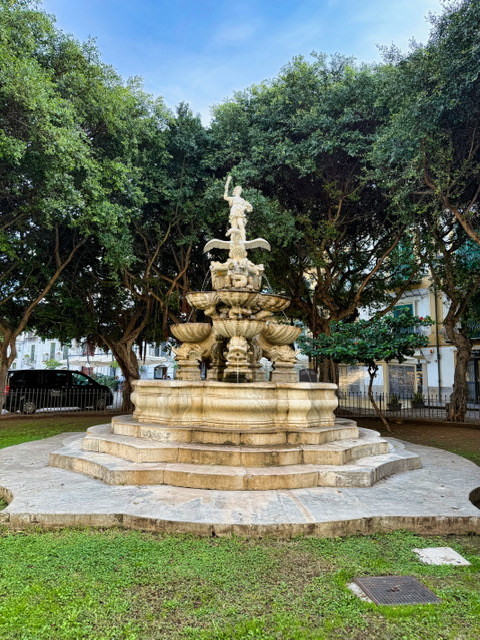
A casual stroll to the fountain, a little gelato pit stop (because obviously) and we acknowledged that time was ticking faster than we expected.
6. Capuchin Catacombs (Because Halloween Weekend Needed a Creepy Twist)
Time was getting tight (as the Catacombs were closing at 1700), so we Ubered to the Capuchin Catacombs (which was supposed to be our last stop). Easily one of the most hauntingly fascinating places in Palermo. The Catacombs date back to the 16th century, when monks started preserving bodies underground. Over 8,000 mummified residents now line the walls, still dressed in their finest clothes.
It’s morbid, fascinating, and honestly one of the best things we did that weekend. My daughter whispered, “This is way better than trick-or-treating.” I agreed — though I wouldn’t recommend bringing toddlers.
After the catacombs, we kept our word and picked up our Palermo Walking Tour again — but backwards. The rest of the stops came in reverse order which worked out perfectly because we were in the heart of the city for dinner.
7. Back downtown: Palazzo dei Normanni (Norman Palace)
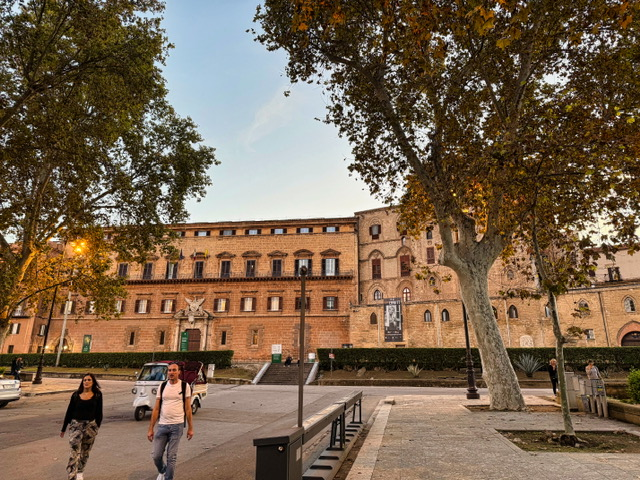
A jewel of Palermo. The oldest royal residence in Europe, built on earlier foundations, hosting kings of Sicily, then Spanish viceroys, now a regional assembly.
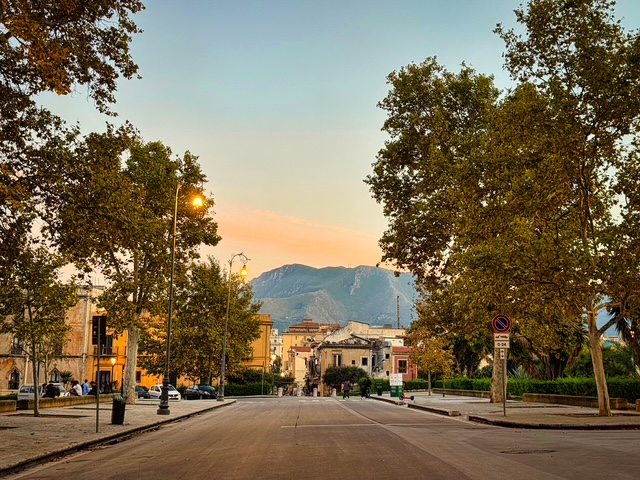
We wandered the park in front as the sun set — golden hour, soft light, and the whole place glowing with that unmistakable Sicilian warmth. It was one of those moments that makes you slow down and just take it all in.
8. Cattedrale di Palermo (the Cathedral)
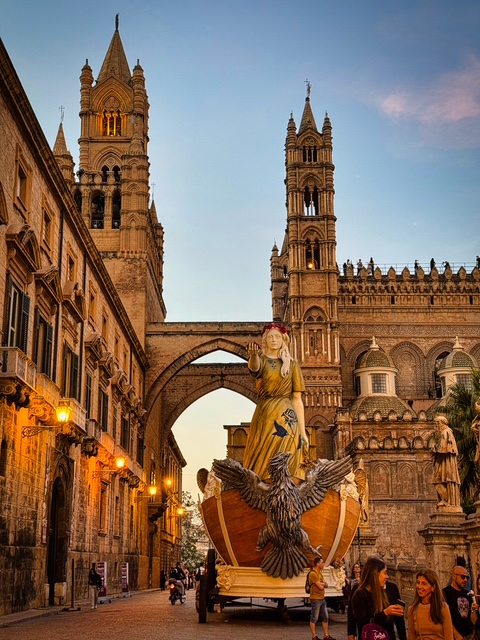
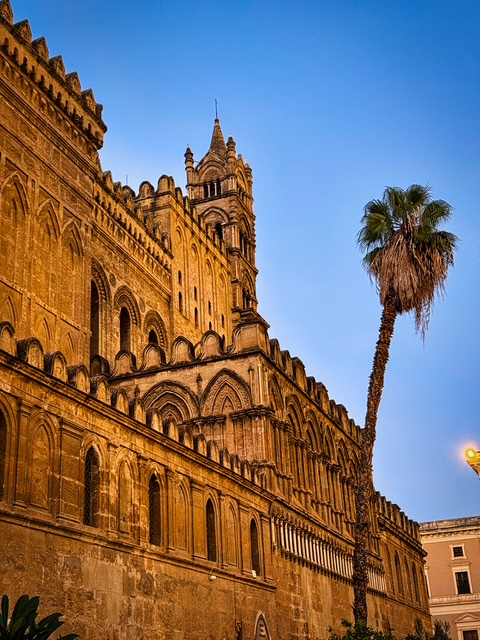
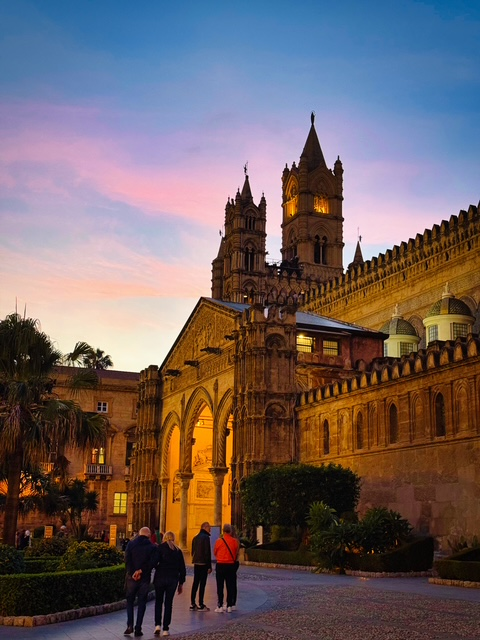
This one is stunning — the fifth-largest cathedral in Italy, and truly one of the most impressive. Stepping inside, the noise of the city seemed to fade away. The vast arches, intricate mosaics, and soft light filtering through stained glass created a sense of calm and awe that felt worlds apart from the lively markets just outside.
9. Quattro Canti and Piazza Pretoria (and yes, dinner)
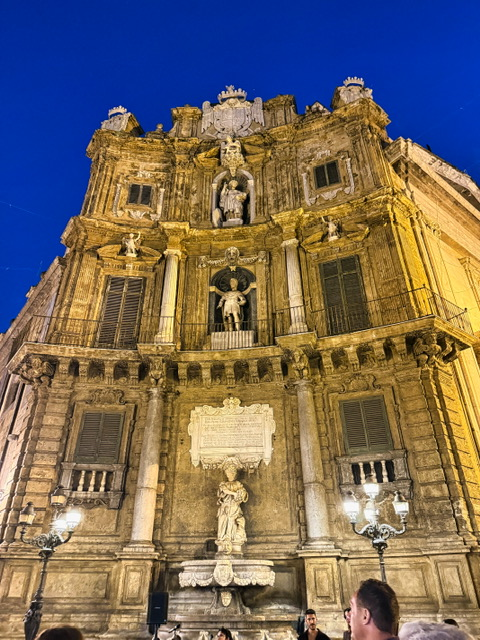
We ended our reversed Palermo Walking Tour at Quattro Canti, the baroque heart of the city where four ornate buildings curve perfectly at the intersection. The square was buzzing with entertainers and a vocalist whose voice echoed through the streets.
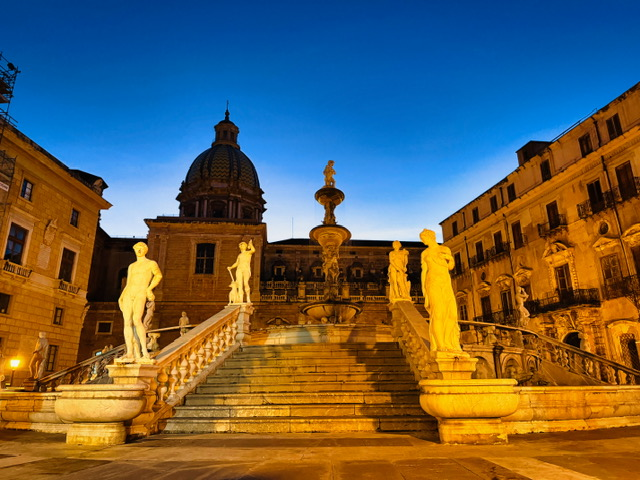
From there, it’s a short stroll to Piazza Pretoria, home to a gorgeous 16th-century fountain known for its mythological statues (and occasional nudity scandal).
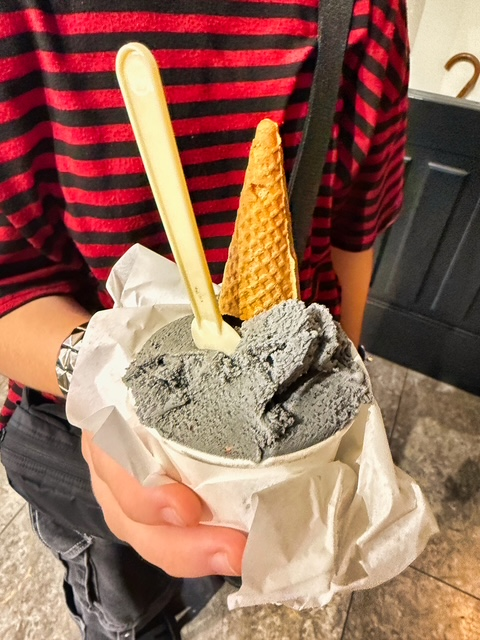
By now, our stomachs had opinions, so we grabbed dinner nearby at Osteria Villena. A bit touristy, but we were hungry. The food was fine, but the gelato shop across the street stole the show — that’s where my daughter discovered Terre Etna, a black vanilla-and-pistachio combo she declared “pretty good, but not life-changing.”
Syps Official Palermo DIY Walking Tour
Just punch each location into google maps and you are on your way!
👉 Teatro Massimo → Galleria delle Vittorie via the open market of Via Bandiera → Chiesa di San Domenico → La Vucciria → Fontana del Garaffello → Piazza Pretoria → Quattro Canti → Cattedrale di Palermo → Palazzo dei Normanni → Catacombes dei Cappuccini
| The Syps Family Palermo Tip-Box 🏛️ Things you might require tickets for: 🎟️ The Capuchin Catacombs: entrance ticket required. 🎟️ The Norman Palace / Palatine Chapel inside it often requires timed entry. (Worth checking ahead.) 🎟️ If you attend anything at Teatro Massimo, obviously ticketed, but you can also book a guided tour. 🏛️ Parking/walking around: if you do self-drive, watch for ZTL (restricted traffic zones) in old town. 🏛️ Things you should pack: 🍋 A compact foldable umbrella (markets get messy if it rains). 🍋 A comfortable pair of walking shoes with good grip (cobbles + grit combo). 🍋 Portable charger/powerbank (you’ll take LOTS of photos). 🍋 Lightweight scarf or wrap: for churches/cathedrals where shoulders need covering. |
The Syps Survival Summary
Did we survive the crowded street markets of Palermo? Yes – and I even bought a table runner for my troubles. We survived Palermo’s “grittier” vibe and found it thrilling rather than off-putting.
Bottom line: If you’re visiting Palermo, go with open eyes, comfy shoes, a healthy appetite for chaos + history + seafood, and maybe a little sense of humour for the “rough around the edges” charm. Our Palermo Walking Tour hit major landmarks, powerful markets, weird-and-wonderful catacombs, and nights alive with music and gelato. I hope you’ll love it as much as we did.
If you are looking for itineraries for other Sicilian towns, check out our post: Why Everyone’s Obsessed with Taormina (and You Will Be Too)