It’s no secret that my husband has long had a dream-slash-love affair with opening a New York–style pizzeria. He’s spent years perfecting dough recipes, debating sauce ratios, and analyzing oven temperatures like it’s a science. But somewhere between the rolling hills of Tuscany and the tranquil valleys of Umbria, something unexpected happened. We may have found a new pizza love — Tuscan-style pizza.
Some links here are affiliate links. If you buy something, I might earn a small commission—thanks for supporting my blog! I only share products I use and stand behind.
Discovering Tuscan Pizza in Tuscany and Umbria
Throughout our travels in Tuscany and Umbria, we only had pizza a few times, but every single time it surprised us. The taste and texture felt shockingly familiar—thin, foldable, and beautifully crisp around the edges. It had serious New York energy.
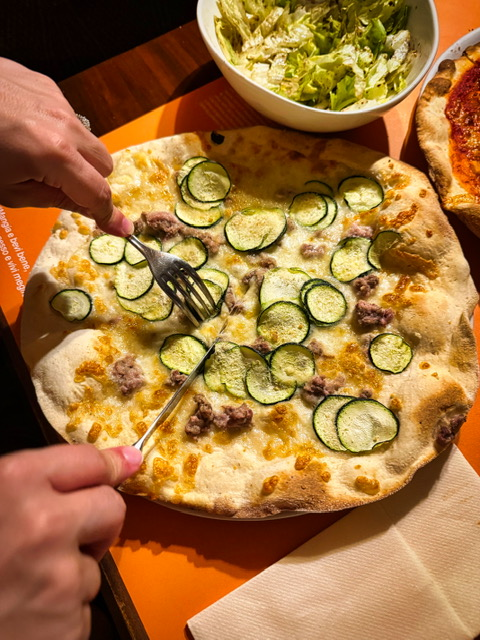
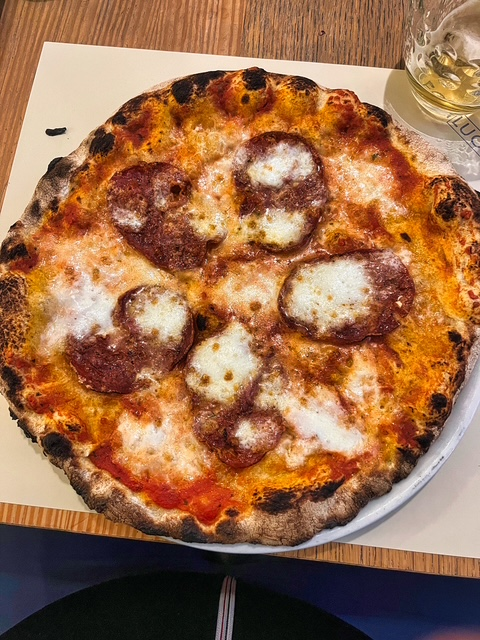
Of course, Tuscan pizza isn’t identical to New York–style pizza. The differences are what make it fascinating:
- 🍞 The dough – Tuscan pizza dough is often lighter and airier, with a longer fermentation time that develops incredible flavor.
- 🧂 The flavor – It’s slightly saltier, with more olive oil in the crust and a simpler, fresher approach to toppings.
- 🍅 The toppings – Less cheese, more balance. You taste the tomato, the olive oil, the dough—each element shines.
It’s rustic, refined, and deceptively simple. And it made us start wondering: could this be our next pizza passion project?
The Night We Fell for Fori Luogo, Scandicci
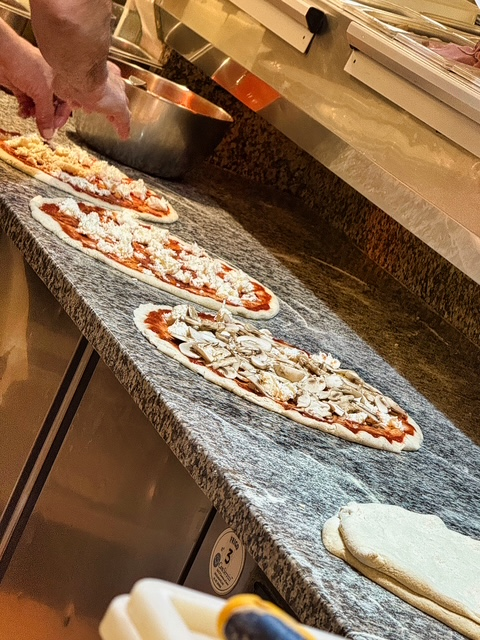
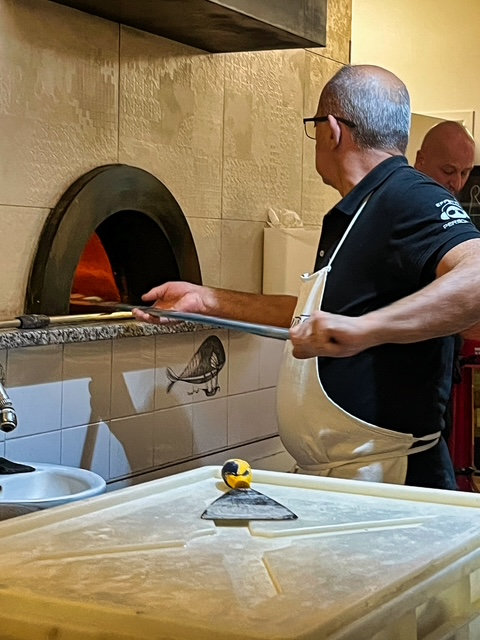
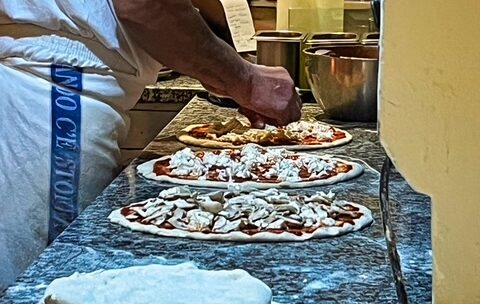
Our turning point came just outside Florence, in the small town of Scandicci, where we found Fori Luogo, a restaurant and pizzeria that locals adore. From our table, we watched the pizzaiolos work like artists—stretching dough, layering toppings, and sliding pizzas into the roaring oven.
My husband, never one to miss a chance for pizza intel, whipped out Google Translate and started chatting with the staff. To our delight, they were thrilled to share their secrets.
We learned that their dough fermentation process lasts about 48 hours to four days, giving the crust its light texture and complex flavor. They use local flour blends, fresh yeast, and a room-temperature natural fermentation to develop depth without heaviness. When it’s time to bake, the pizzaiolos dust the counter with semolina flour, used exclusively for stretching the dough—giving the base that signature slightly gritty texture and subtle crunch. The pizzas are baked at a slightly lower temperature than Neapolitan style, creating that perfect golden, blistered crust that’s both crisp and tender.
Dinner quickly turned into an impromptu pizza masterclass—and we soaked in every delicious detail.
Want to Try Making Tuscan-Style Pizza at Home?
Our Tuscan Pizza Essentials (all easy Amazon finds):
- 🍕 Pizza Stone or Steel – It mimics that hot stone oven base and gives your crust that golden, blistered edge (my husband prefers a pizza steel)
- 🍕 Semolina Flour – Used for stretching the dough so it doesn’t stick and gives that authentic Tuscan crunch.
- 🍕Pizza Peel – Because nothing says “I’m serious about pizza” like confidently sliding your dough onto a blazing-hot stone without burning your eyebrows.
- 🍕 Good Olive Oil – Tuscan-style pizza is all about simplicity, so finishing your pizza with a drizzle of high-quality olive oil makes a world of difference.
Could a Tuscan Pizzeria Be Next?
One thing’s for sure: if we ever do open that pizzeria, you might just find Tuscan-style slices on the menu. Uh oh… looks like New York pizza might have some competition.