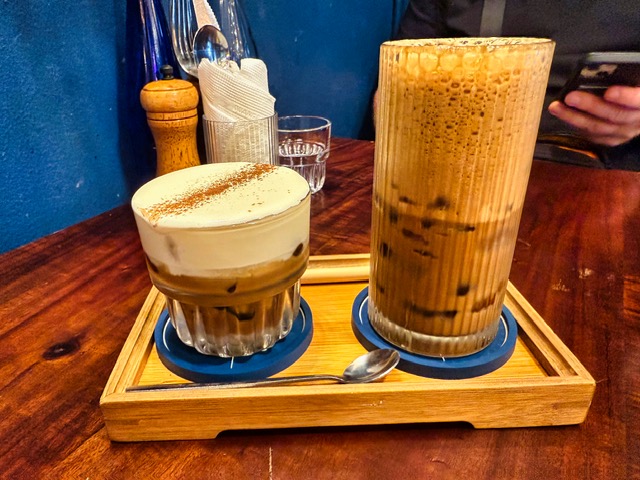
Vietnam doesn’t just do coffee — it does salt coffee, egg coffee, and coconut coffee, and somehow elevates it all. In a country known for bold robusta beans and tiny plastic stools spilling onto sidewalks, coffee isn’t just a drink — it’s a ritual.
And while we originally set out to compare egg coffee vs. salt coffee… things escalated.
We ended up taking a Vietnamese coffee-making class where we learned how to make four iconic drinks:
- Traditional phin coffee (with condensed milk)
- Salt coffee
- Egg coffee
- Coconut coffee
Naturally, we tried them all. For research, obviously.
A quick shoutout to Sữa Cafe, where we took our class — an amazing spot that also supports employment opportunities for people with disabilities, which made the experience even more special. You can book here.
Some links here are affiliate links. If you buy something, I might earn a small commission—thanks for supporting my blog! I only share products I use and stand behind.
A Quick Coffee Lesson We Didn’t Expect
One of the most interesting things we learned?
Vietnam is the second largest producer of coffee in the world, right after Brazil.
But it’s not just about quantity — it’s about the beans.
Robusta vs. Arabica
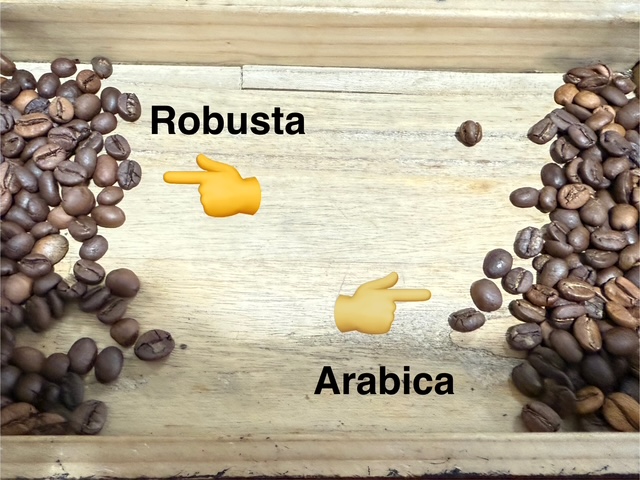
Vietnam is best known for robusta beans, and once you taste them, you understand why:
- Robusta → Strong, bold, more bitter, higher caffeine, slightly nutty and earthy
- Arabica → Smoother, lighter, slightly acidic, with more subtle fruity or floral notes
We learned that many Vietnamese coffees actually use a blend, and the “ideal” ratio is often considered:
👉 70% robusta / 30% arabica
This gives you the best of both worlds — the strength and intensity of robusta, balanced with the smoother, more complex notes of arabica.
Once you know this, every cup in Vietnam starts to make a lot more sense.
Vietnamese Phin Coffee (Cà Phê Sữa Đá)
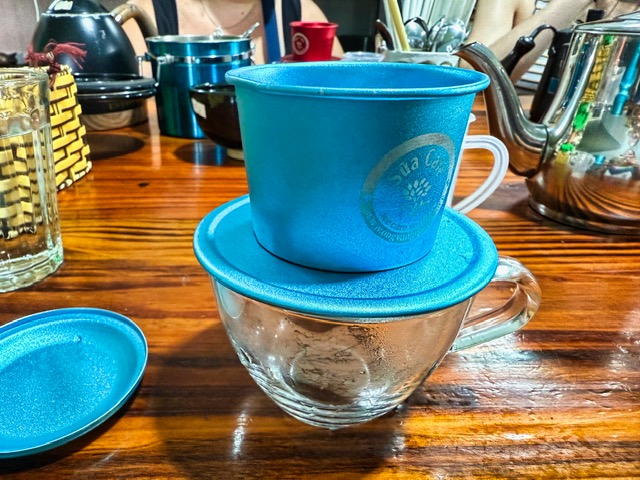
Let’s start with the classic.
This is the foundation of Vietnamese coffee culture — strong robusta coffee brewed slowly through a small metal phin filter, dripping into a glass of sweetened condensed milk.
It is Bold. Strong. Slightly bitter. Balanced by that thick, sweet condensed milk.
Served iced (cà phê sữa đá), it’s refreshing and incredibly drinkable — the kind of coffee you could have every single day.
This one surprised me the most — not because it was flashy, but because it was so good. Simple, balanced, and exactly what you want in a coffee.
My husband’s favorite. Hands down.
Egg Coffee (Cà Phê Trứng)
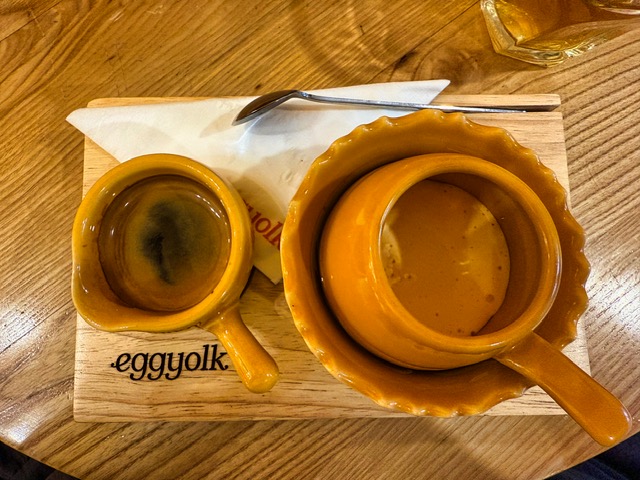
Created in Hanoi in the 1940s, egg coffee was invented during a milk shortage linked to World War II. A bartender, Nguyễn Văn Giảng, whisked egg yolks with sugar and condensed milk to create a creamy substitute — and accidentally created one of Vietnam’s most iconic drinks. Egg coffee sounds strange until you try it. Egg yolk. Sugar. Condensed milk. Whipped into a thick, glossy foam and poured over strong Vietnamese coffee.
It looks like dessert.
Tastes like dessert.
Feels like dessert.
But what surprised me most wasn’t just the richness — it was the nostalgia.
The first sip instantly reminded me of something from my childhood: Kogel Mogel.
If you didn’t grow up with it, Kogel Mogel (sometimes spelled kogiel mogiel) is a traditional Polish treat made by whisking raw egg yolks with sugar until they turn pale, thick, and creamy. That’s it. No baking. No cooking. Just elbow grease and patience. Sometimes my family would add a splash of vanilla or a bit of cocoa powder, but the base was always simple — egg and sugar beaten into a silky, sweet foam.
As a kid, it felt magical. You’d watch the bright yellow yolks slowly transform into this airy, glossy cream. It was both dessert and science experiment.
And that’s exactly what hot egg coffee tasted like to me — warm, slightly custardy, sweet egg foam melting into something darker and more complex underneath. It was like my childhood Polish kitchen met a Vietnamese café.
☕ Hot Egg Coffee
Hot egg coffee is rich and velvety — almost like drinking melted tiramisu. The foam is thick and creamy, and when it blends with the dark coffee underneath, it creates this sweet, custard-like experience.
It’s indulgent. Heavy. Comforting.
If you’re not in the mood for something sweet, it can feel like a lot. But on a cooler day (or in heavy air-conditioning), it hits perfectly.
🧊 Iced Egg Coffee
Iced egg coffee surprised me. Once the ice melts slightly and everything blends together, it becomes lighter and more refreshing.
Still sweet. Still creamy. But less intense.
The foam slowly sinks into the coffee, and every sip changes slightly as it mixes. It feels like a drink that evolves while you’re sitting there.
If you love sweet coffee drinks, this might be your winner.
Salt Coffee (Cà Phê Muối)
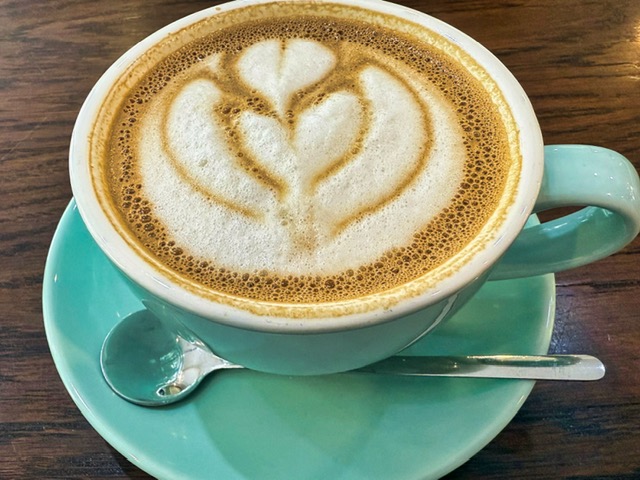
Salt coffee originated in Huế, and it’s a completely different vibe.
Instead of egg foam, you get a salted cream topping. Think whipped cream, but slightly savory. It sits on top of strong Vietnamese coffee and condensed milk, creating that magical sweet-salty combination.
If you’re a salted caramel fan (hi, it’s me 🙋♀️), this one is immediately intriguing.
☕ Hot Salt Coffee
Hot salt coffee feels balanced.
The salt cuts through the sweetness of the condensed milk and smooths out the bitterness of the robusta beans. It doesn’t feel as heavy as egg coffee. It feels more… refined? Subtle?
Each sip has contrast — sweet, salty, bitter — all at once.
It’s complex without being overwhelming.
🧊 Iced Salt Coffee
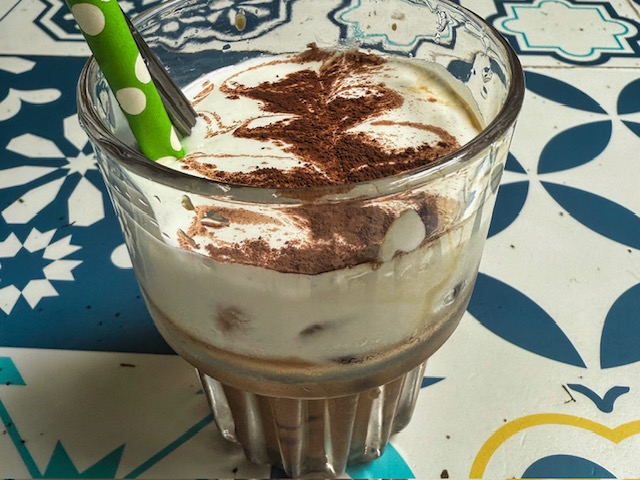
Iced salt coffee might be my quiet favorite.
As the ice melts, the saltiness softens and the drink becomes incredibly smooth. It’s refreshing, slightly creamy, and far less dessert-like than egg coffee.
It feels more like something I could drink every day.
Egg coffee feels like a treat.
Salt coffee feels like a habit.
And that might be the difference.
My personal favorite.
Coconut Coffee (Cà Phê Dừa)
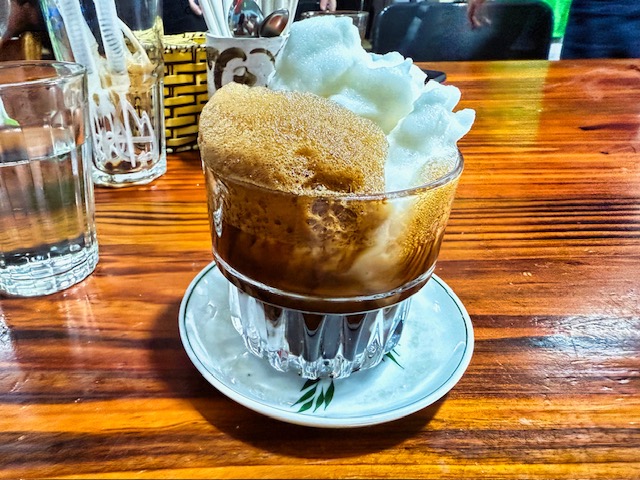
And then… coconut coffee.
Often described as a “Vietnamese affogato,” this drink blends coffee with a creamy coconut mixture, sometimes frozen or blended.
It is cold, creamy, slightly icy, and tropical. The coconut softens the strong coffee and adds a subtle sweetness.
More dessert than coffee — and perfect in the heat.
So… What’s the Difference?
After making (and drinking) all four, here’s the simplest way to think about them:
- Phin Coffee → Strong, classic, everyday coffee
- Egg Coffee → Rich, creamy, dessert-like
- Salt Coffee → Smooth, balanced, sweet + salty
- Coconut Coffee → Cold, tropical, indulgent
| The Syps Family Vietnamese Coffee Tip Box ☕ Buy a Vietnamese Phin Filter – The small metal drip filter used to brew traditional Vietnamese coffee. It’s essential if you want to recreate the strong, slow-drip coffee used for egg coffee and salt coffee. ☕ Try Vietnamese Robusta Coffee Beans – they are stronger, more bitter, and perfect for sweet coffee drinks. ☕ Use a Handheld Milk Frother – Perfect for whipping the egg foam used in egg coffee or the creamy salted topping used in salt coffee. ☕ Book a Vietnamese Coffee Class – Many classes teach you how to make egg coffee, salt coffee, coconut coffee, and traditional phin coffee. |
The Syps Survival Summary
Did we survive all the caffeine while taste testing the different Vietnamese Coffees?
Yes… although trying 4 coffee drinks in the name of “research” may have been slightly ambitious. Vietnamese coffee is famously strong, but when the drinks are this good, stopping at just one isn’t really an option.