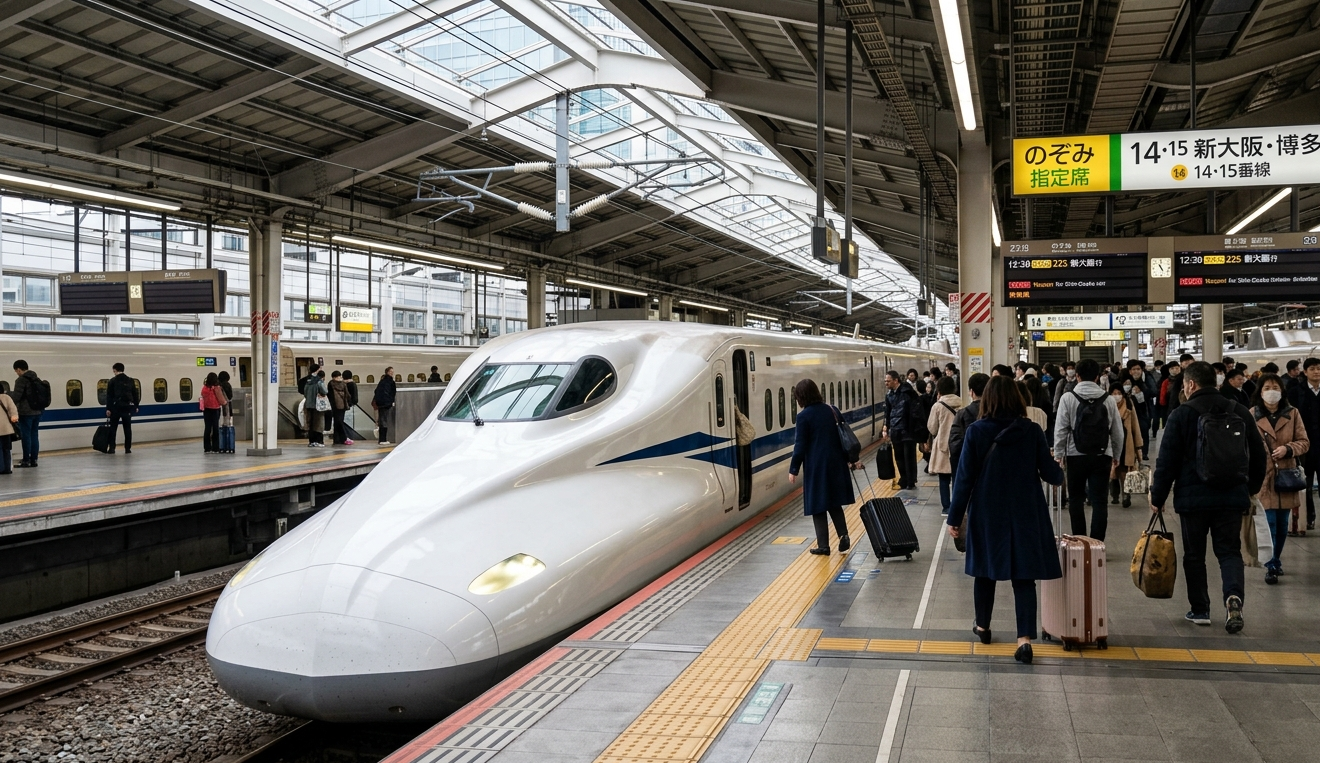
Travelling from Osaka to Tokyo on the famous Shinkansen bullet train was honestly one of the highlights of our trip to Japan. It was fast, smooth, clean, organized — and somehow way less stressful than we expected.
The word Shinkansen basically refers to Japan’s high-speed rail system, although most tourists simply call it the “bullet train.” The sleek, aerodynamic nose of the train is actually what earned it that nickname.
Some links here are affiliate links. If you buy something, I might earn a small commission—thanks for supporting my blog! I only share products I use and stand behind.
Booking Our Tickets
We pre-booked our tickets about two months ahead of time to make sure we could get seats together during cherry blossom season. We booked through Japan Bullet Train, and the process was surprisingly easy. We received our confirmation within 24 hours.
For three people, the tickets cost about 54,000 yen, which worked out to roughly $500 CAD depending on the exchange rate at the time.
The instructions told us to download the QR codes ahead of time so we could scan them directly at Shin-Osaka Station.
A Few Crazy Bullet Train Facts
Before visiting Japan, I knew the Shinkansen was “fast.”
I did not realize it was “blink and suddenly you’re in another city” fast.
The fastest trains on this route are the Nozomi trains, which travel along the famous Tōkaidō Shinkansen line between Osaka and Tokyo.
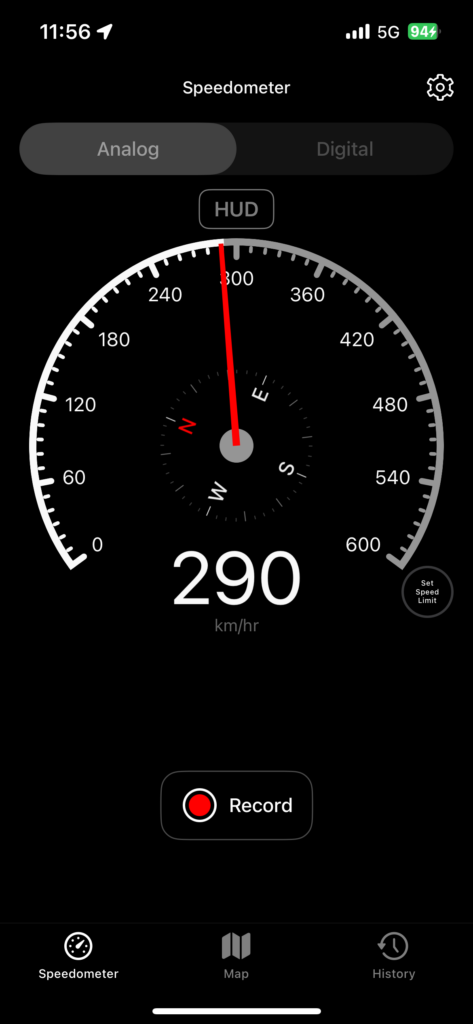
The route covers approximately 515 kilometres, and the Nozomi trains can reach operating speeds of up to 285 km/hr (177 mph) while making the journey in roughly 2 hours and 21 minutes. We clocked it at 290 km/hr while onboard (pic above).
There are actually three main types of Shinkansen trains on this route:
- Nozomi – the fastest option with very limited stops (this is what we booked)
- Hikari – slightly slower with a few more stops
- Kodama – the local version that stops at every station along the route
The Nozomi is the train most tourists want because it is the quickest option, but if you are travelling with a Japan Rail Pass, keep in mind that standard JR Passes traditionally covered the Hikari and Kodama trains instead.
One thing that completely blew our minds in Japan was how dramatically the bullet train cuts travel time between cities.
For example, travelling from Osaka to Kyoto on the Shinkansen takes only about 15 minutes. On a regular train, the same trip is usually closer to 45 minutes.
In Canada, a 15-minute train ride barely gets you across part of the city.
Japan’s bullet trains are also famous for being unbelievably punctual. Average delays are often measured in seconds, not minutes.
And somehow, despite travelling at ridiculous speeds, the ride barely feels bumpy at all.
It is one of those things that makes you realize:
“Oh. THIS is what public transportation could be.”
Navigating the Train Station
By this point in our trip, we had already spent quite a bit of time navigating local trains around Osaka, so we were getting more comfortable with Japan’s train system.
That being said, Japanese train stations can feel very overwhelming at first if you are not used to them. (Upcoming post: Surviving and Navigating Trains in Japan Without Having a Complete Meltdown).
The good news? Everything is incredibly well organized.
If you need help, staff members are everywhere and genuinely helpful. You basically just find the signs for your train line, follow them, scan your QR code or ticket, head to your platform, and you’re good to go.
And the trains in Japan are ridiculously on time.
First Impressions of the Bullet Train
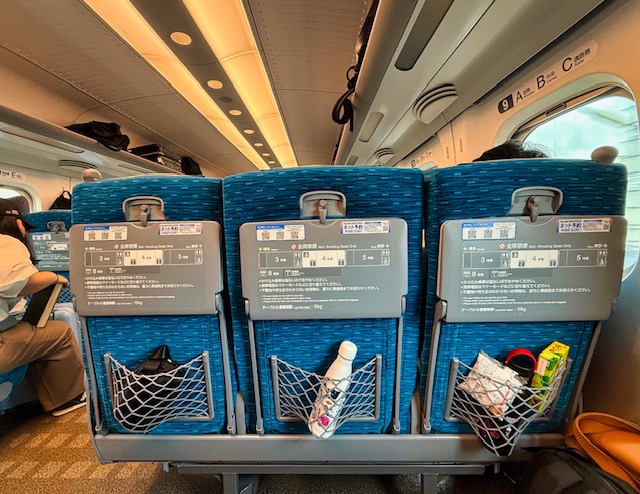
One of our very first impressions was how unbelievably clean everything was. The Japanese clearly take pride in maintaining their transit system.
The stations were spotless. The train itself was spotless. No graffiti anywhere. Even the bathrooms were clean.
Honestly, after our experience on the high-speed trains in Spain — where the bathrooms were… let’s just say traumatizing — this felt like luxury travel.
There was also way more leg room than we expected. Everyone was quiet, respectful, and mindful of noise levels. The train itself was incredibly quiet too. It just felt calm.
The Scenery Along the Way
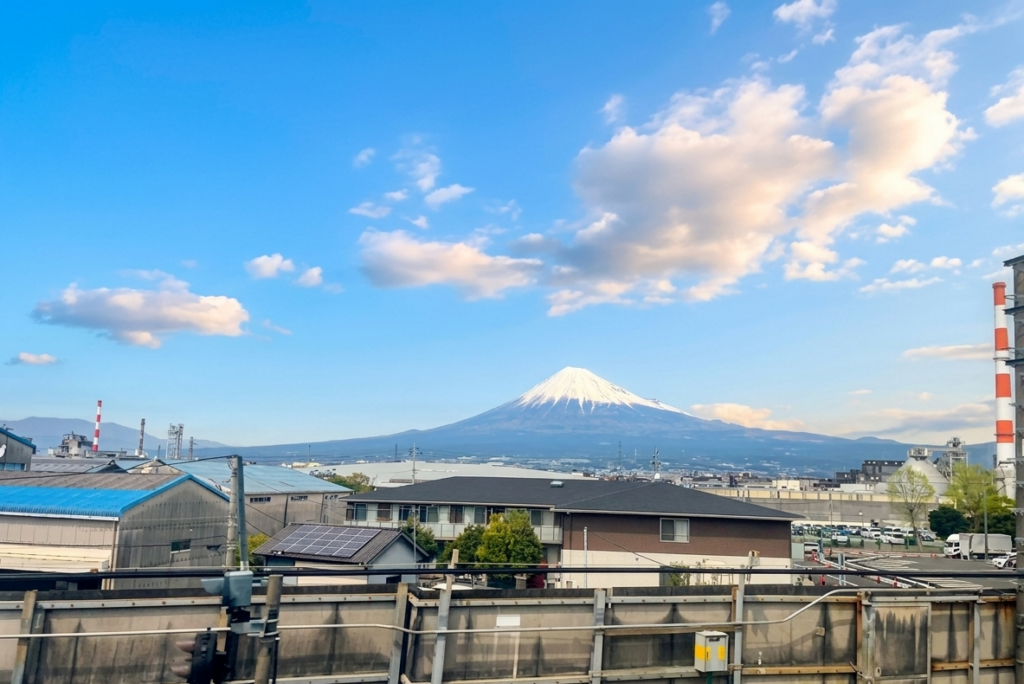
And then there was the scenery.
We were travelling during cherry blossom season, so the views from the train were beautiful almost the entire ride. Every so often we would pass clusters of blooming cherry trees, little towns, and stretches of countryside that looked straight out of a movie.
And yes — we even saw Mount Fuji in the distance.
That moment alone made the trip feel surreal.
| The Syps Family Shinkansen Bullet Train Tip Box 🚄 Prebook your Shinkansen tickets to ensure you have a reserved seat 🚄 Download your QR codes/screenshots before arriving at the station in case your internet is spotty. 🚄 Arrive a little early — major train stations in Japan are huge. 🚄 Be mindful of noise levels on the train. Japanese train etiquette is very quiet and respectful. 🚄 If you want the best chance of seeing Mount Fuji, try to sit on the right-hand side when travelling from Osaka to Tokyo. 🚄 Don’t panic if the train pulls in and leaves quickly. The boarding process in Japan is basically a perfectly choreographed speed run. |
The Syps Survival Summary
Did we survive 2 hours and 21 min travelling at almost 300 km/hr? Yes. And honestly… we would do it again in a heartbeat.
The Shinkansen somehow managed to feel both insanely fast and incredibly relaxing at the same time. No turbulence. No chaotic boarding process. No overcrowded aisles. No stress.
Just comfortable seats, peaceful vibes, beautiful scenery, and the occasional moment of panic when you realize you’re travelling faster than most people drive on highways.
It ended up being one of those travel experiences that felt very “Japan” — efficient, clean, respectful, organized, and somehow still exciting even when everything runs perfectly.
Definitely a 10/10 experience.