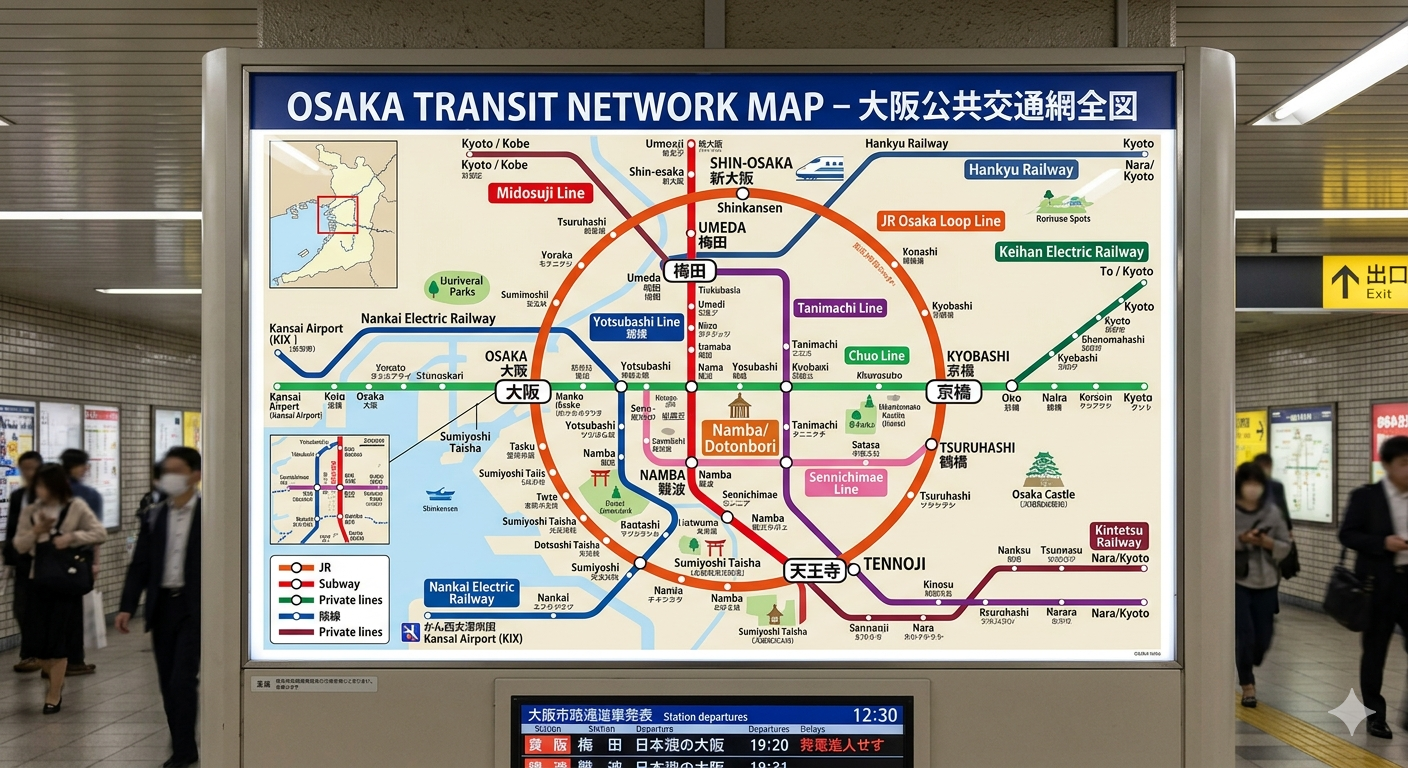
If you’ve never been to Japan before, looking at the train map for the first time feels less like public transportation and more like someone handed you the wiring diagram for a nuclear reactor.
Lines everywhere. Colors everywhere. Hundreds of people moving with terrifying confidence while you stand there clutching your suitcase wondering if you accidentally boarded a train to another dimension.
But here’s the thing:
Once you figure out the basics, Japan’s train system is actually one of the most organized, efficient, and impressive things you will ever experience.
And somehow… it works for millions and millions of people every single day.
Some links here are affiliate links. If you buy something, I might earn a small commission—thanks for supporting my blog! I only share products I use and stand behind.
Step One: Buying Train Tickets Without Panicking
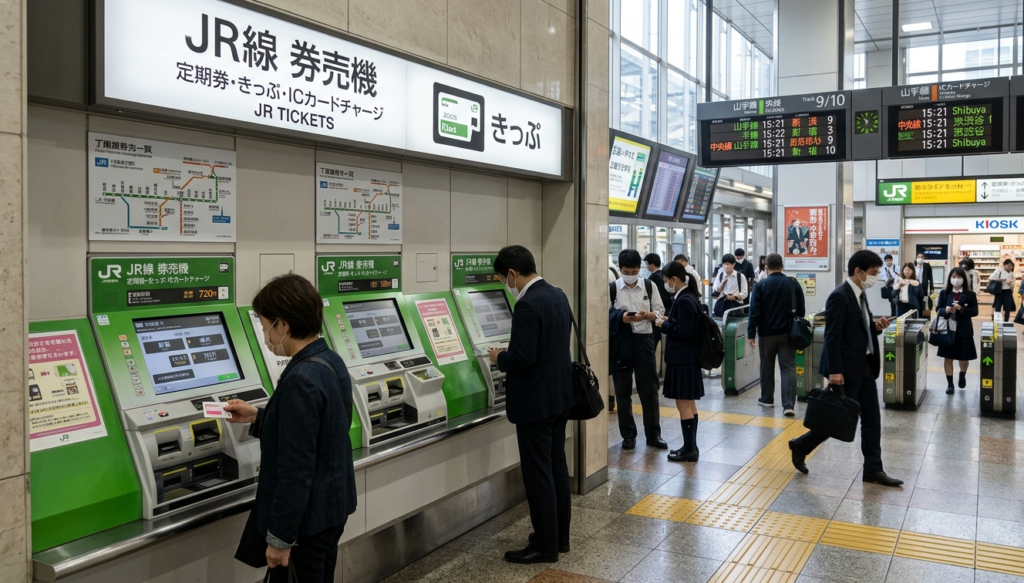
At first, the ticket machines looked intimidating.
Then we realized they were actually pretty straightforward.
First:
Select English immediately.
That makes life MUCH easier.
Then:
- Choose how many people
- Select your destination station (if available)
- Pay
- Get your tickets
At some stations, you can simply pick your destination station directly.
At others, you need to know the fare amount based on distance/stops.
This sounded horrifying at first… but honestly? We just asked an attendant.
Every single time someone kindly pointed at the correct fare button to press.
Don’t Forget: You Tap In AND Out
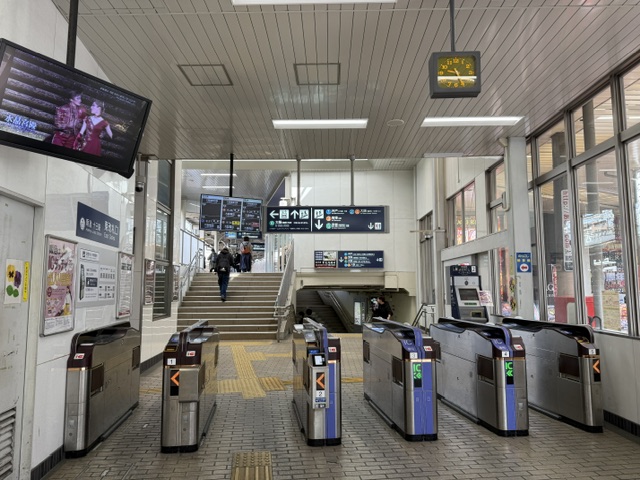
This is important.
You insert or tap your ticket:
- when entering the gates
- AND again when exiting
The system calculates your fare based on your route.
One time we accidentally changed our route and ended up at a different station than planned.
Cue mild panic.
But Japan has “Fare Adjustment” or “Price Correction” machines near the exits.
An attendant helped us the first time, but the machine itself was actually very straightforward.
Basically:
- insert your ticket
- pay the difference
- continue on your way
Easy once you know it exists.
Google Maps Is Basically Your Train Tour Guide
I cannot stress this enough:
Use Google Maps.
Not “sort of.”
Not “occasionally.”
Constantly.
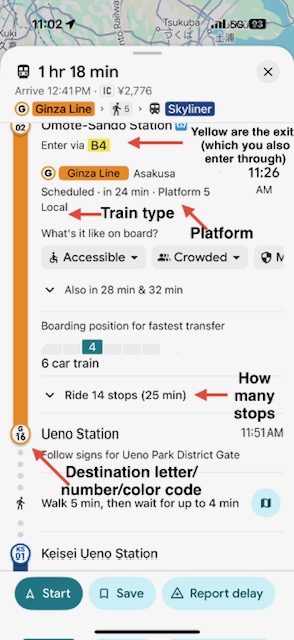
Google Maps in Japan is shockingly detailed. It doesn’t just tell you which train to take — it tells you:
- what platform to go to
- which exit to use
- what train line you need
- what time the train arrives
- what time it leaves
- whether it’s local, rapid, or express
- how many stops
- even what train car is best sometimes
Honestly, it felt like cheating.
One of the biggest mistakes we made early on was ending up on the wrong side of a station. This matters WAY more than you’d think because Japanese stations are enormous. Like… mini underground cities enormous.
You can’t always just “cross over quickly.”
Sometimes being on the wrong side means:
- multiple escalators
- several floors
- endless hallways
- crowds of commuters
- and a growing sense of panic while your train departure countdown ticks lower and lower.
So always double check the entrance Google Maps tells you to use.
Forget Train Station Names — Follow the Colors and Numbers
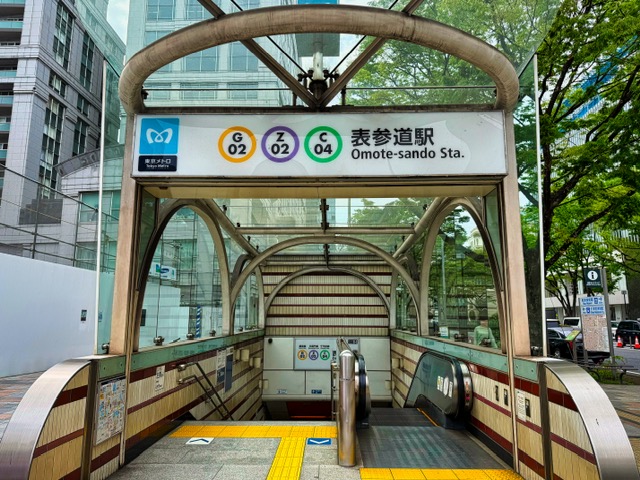
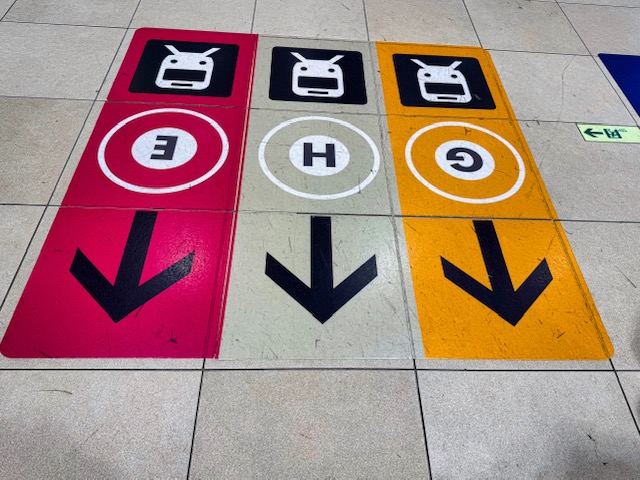
One thing that helped us tremendously was ignoring long station names when possible and focusing on the line indicators instead.
For example:
- G12
- M18
- T09
These are MUCH easier to follow when you’re overwhelmed.
Everything is color coordinated too:
- Ginza Line = orange
- Marunouchi Line = red
- etc.
So instead of trying to memorize complicated station names, we basically followed:
- the color
- the letter
- the number
Honestly, it made navigating way less intimidating.
Not All Trains Stop Everywhere
This is important.
Just because you’re on the correct line does NOT mean you’re on the correct train.
Some trains are:
- Local
- Rapid
- Express
- Limited Express
And some of those skip stations.
It will be written on the front and/or side of the incoming train.
A lot of stations have digital signboards overhead showing:
- what train is arriving
- where it’s going
- whether it’s local or express
Google Maps usually warns you too, thankfully.
But definitely double check before getting on.
Otherwise you may suddenly realize your station flew by five minutes ago and now you’re halfway across Tokyo questioning your life choices.
Using Exit Signs to Enter Is Weird at First
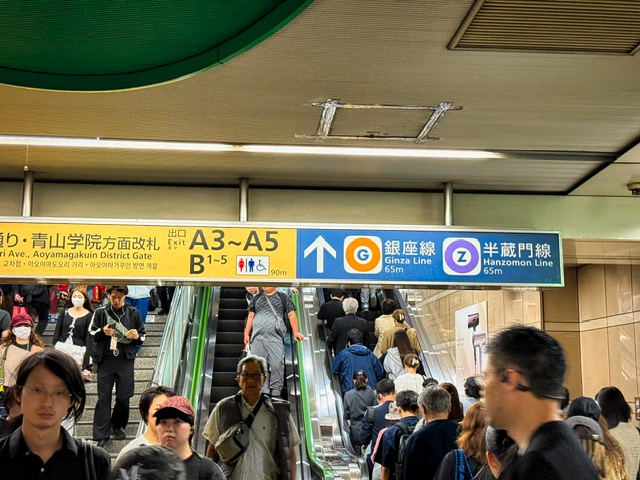
Using Exit signs to Exit. Makes Sense. Yes. Great.
The exits are usually numbered or lettered:
- Exit A1
- Exit East
- Exit 5
- South Gate
Google Maps often tells you the exact exit to use, which is incredibly helpful because coming out the wrong exit in Tokyo can put you blocks away from where you intended to be.
But one thing that confused us initially was how you often end up using the “Exit” signs to ENTER the station.
Japanese stations are layered vertically with:
- underground passageways
- shopping areas
- train lines
- exits
- connecting stations
Sometimes you’ll feel like you’re wandering through a mall, then suddenly you’re on the correct platform.
What finally clicked for us is this:
When you are already inside the station, the Exit signs guide you OUT to the street.
But when you are trying to enter from the street and reach your platform, you are essentially following those same Exit signs in reverse.
So if Google Maps tells you:
“Use Exit A1”
You are actually looking for the entrance connected to Exit A1.
Once inside, you keep following the signs backward toward the station interior instead of outward toward the street.
It feels completely backwards at first, but once you understand that the exits are basically giant location markers for the station, navigating becomes MUCH easier.
The Train Stations Are MASSIVE
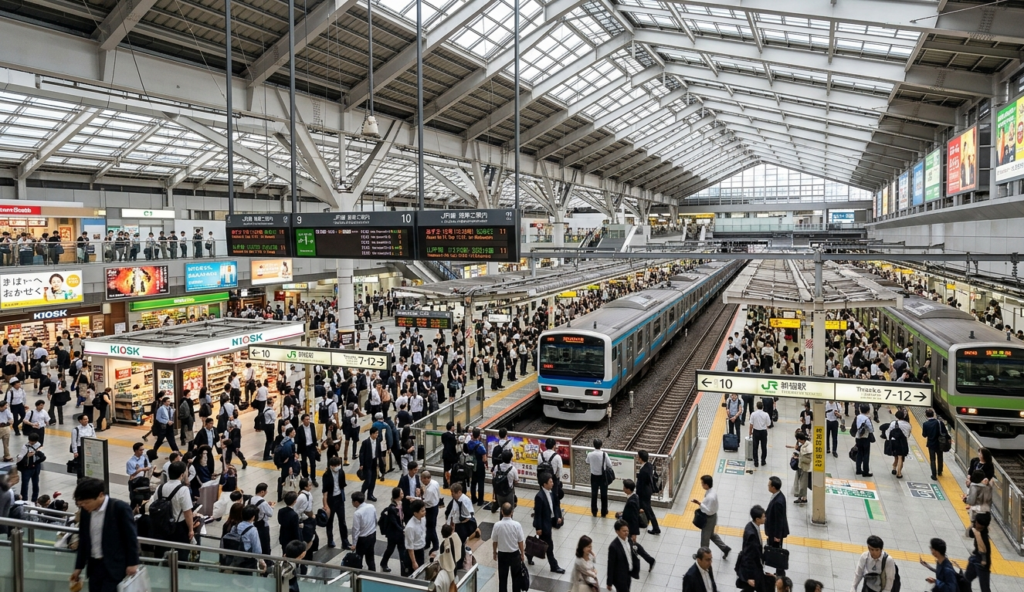
I thought I understood “busy train station” before Japan.
I did not.
Compared to places like Canada, Japan’s stations are on another level entirely. Even New York City didn’t compare.
Some stations feel like entire underground cities:
- restaurants
- shopping malls
- convenience stores
- bakeries
- multiple train companies
- endless corridors
Yet somehow… it’s organized.
People move efficiently.
Nobody shoves.
Nobody screams.
And despite the sheer number of people, everything somehow flows.
Sometimes You Need to Change Train Stations
This part can be confusing.
Sometimes your route involves changing:
- train lines
- stations
- or even train systems entirely
In some cases, this means you need to:
- exit one station
- purchase a separate ticket
- then enter another line
Google Maps usually indicates this, but it can still catch you off guard the first time.
The Hello Kitty Train Surprise
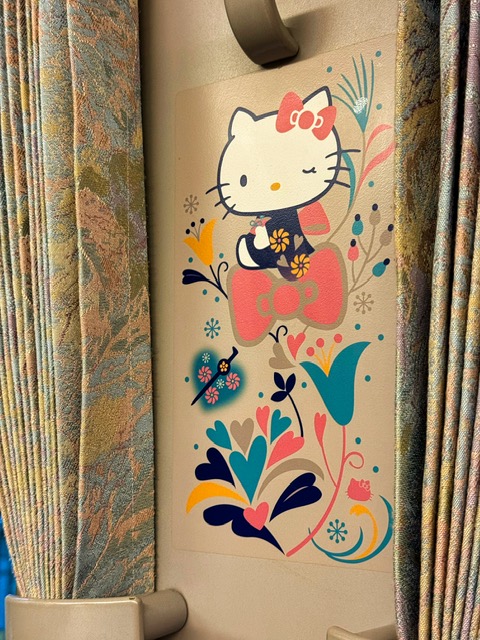
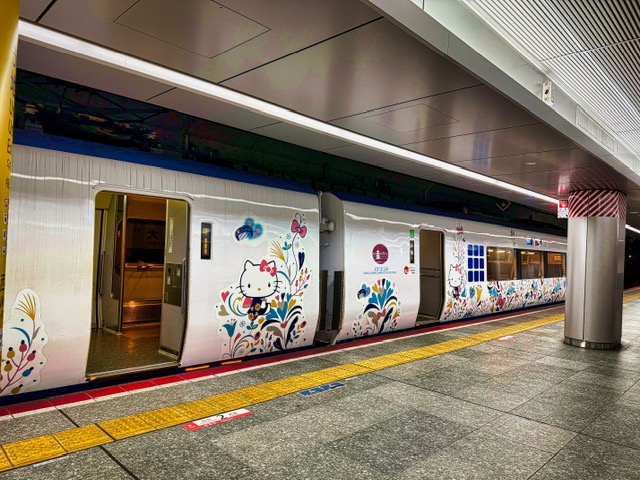

Now let’s talk about one of the most unexpectedly delightful moments of our trip.
If you’re lucky, you might catch the Hello Kitty train running between Kansai Airport and Osaka.
Guess what?
We were lucky.
And honestly, after a long flight, stepping onto a train covered in Hello Kitty decorations somehow felt like the most Japan experience possible.
The train had:
- Hello Kitty artwork everywhere
- themed seating
- adorable designs throughout the cars
- and enough pink to make you immediately forget how tired you are
It was one of those little travel moments you don’t plan for but end up remembering forever.
Only in Japan can public transportation somehow also be ridiculously cute.
The Cleanliness Is Honestly Unreal
This part genuinely shocked us.
The trains were spotless.
The stations were spotless.
No graffiti.
No garbage or overflowing bins.
Not even cigarette butts on the ground.
At one point we noticed actual wood paneling on some train seats and realized:
“In Canada or the U.S., people would absolutely carve initials into this.”
But not here.
Everything felt respected.
And considering the Tokyo greater metro population is almost the size of ALL of Canada… it’s honestly mind blowing how clean and organized everything is.
Other Helpful Things We Learned
Stand on the Correct Side
- Platforms often have arrows showing where to line up.
- People actually follow them.
- Let passengers off first before boarding.
Don’t Talk Loudly on the Train
Japanese trains are generally very quiet.
People:
- scroll phones
- nap
- sit quietly
Phone calls are considered rude.
Rush Hour Is Real
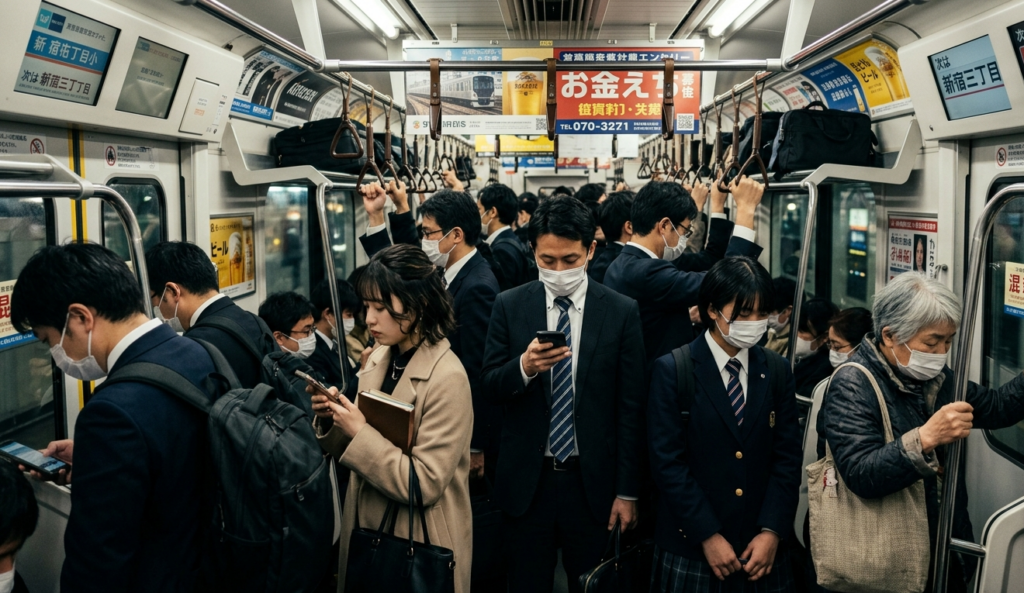
If possible, avoid peak commuter times unless you enjoy being packed into humanity like a sardine.
IC Cards Make Life Easier
Cards like Suica or Pasmo are rechargeable transit cards that let you tap in and out instead of constantly buying tickets.
Highly recommended if you’re using trains a lot.
Give Yourself Extra Time
Even when you understand the system, stations are huge.
Transfers can involve:
- long walks
- multiple escalators
- different floors
- crowds
“Five minutes should be enough” is dangerous thinking in places like Tokyo.
| The Syps Family Navigating Trains in Japan Tip Box 🚇 Japan still uses a lot of coins, so a coin pouch is essential 🚇 Select English on the ticket machine first 🚇 Use Google Maps constantly — your phone becomes your personal train navigator in Japan, so between directions, platform info, and route changes, a portable charger quickly becomes an absolute necessity. 🚇 Double check whether your train is Local or Express 🚇 Follow the line colors and station numbers 🚇 Give yourself extra transfer time 🚇 Stand in the marked boarding lines 🚇 Let passengers off before getting on 🚇 Keep voices low on trains 🚇 Don’t panic if you miss a stop — it happens 🚇 Ask attendants for help if confused — they were incredibly helpful every time we needed assistance |
The Syps Survival Summary
Did we occasionally stare at train maps like confused raccoons holding suitcases? Without question.
But honestly? Japan’s train system ended up being one of the coolest parts of the trip.
Once you understand the basics, it becomes weirdly fun.
You start recognizing line colors.
Confidently follow the G12 signs like a local.
Master the art of transferring between stations.
You stop panicking every time you hear the train chime.
And somehow this absolutely massive transportation system — moving millions upon millions of people every day — runs cleaner, quieter, and more efficiently than anything we’ve ever experienced.
Also: we got a Hello Kitty train!
So really, we peaked early.