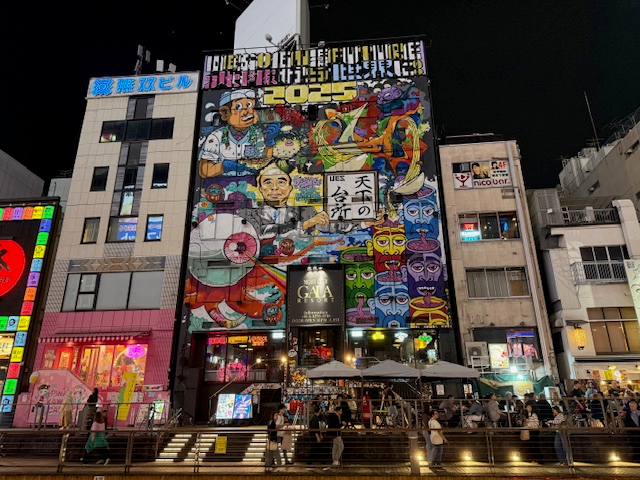
If you’re heading to Osaka, there’s a good chance you’ve already seen photos of Dotonbori—a glowing stretch of neon lights, giant animated signs, packed walkways, and endless food stalls lining the canal.
It’s loud. Chaotic. Touristy. And honestly? I still think you should go.
Dotonbori feels like sensory overload in the best possible way. The smell of grilled food fills the air, giant mechanical crabs and dragons move overhead, and neon reflections bounce across the canal while thousands of people squeeze through the streets below. It’s one of those places that instantly feels like Japan the moment you arrive.
Some links here are affiliate links. If you buy something, I might earn a small commission—thanks for supporting my blog! I only share products I use and stand behind.
The Famous Running Man and Canal Views
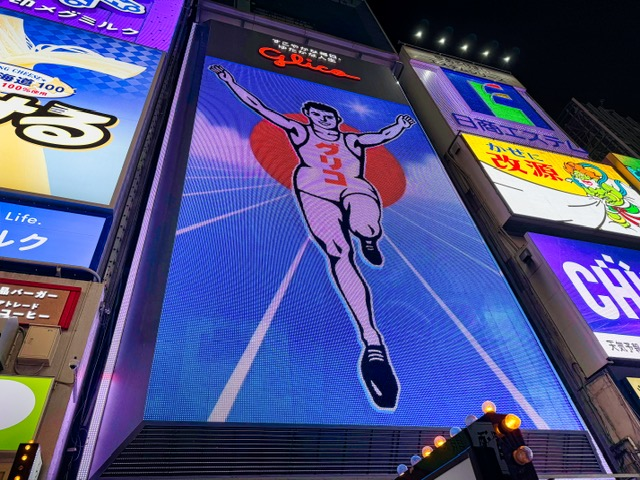
One of the biggest landmarks in Dotonbori is the famous Glico Running Man Sign. Yes, everyone takes the same photo here—and yes, you probably will too.
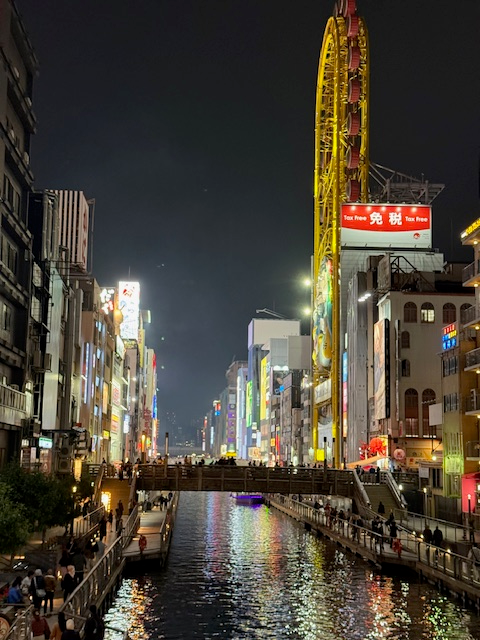
The area sits along the canal, and one of the best ways to take in the lights is from the water itself. You can hop on a short canal boat cruise that slowly passes beneath the glowing signs and crowded bridges. It’s touristy, but it’s also a really fun way to experience the district from a different perspective.
At night, the reflections on the water make the whole area feel almost surreal.
What Food Is Dotonbori Famous For?
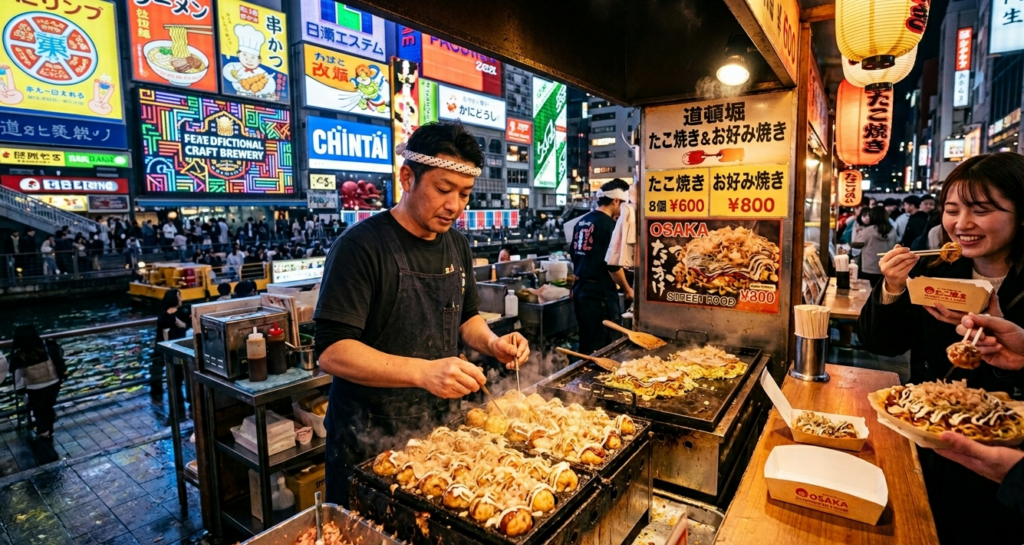
If there’s one thing Dotonbori is known for besides neon lights, it’s food.
This is one of the best places in Osaka to try famous local specialties like:
- Takoyaki (octopus balls)
- Okonomiyaki (savory Japanese pancake)
- Kushikatsu (deep-fried skewers)
- Ramen
- Strawberry candy skewers
- Kobe and Wagyu beef skewers
Part of the fun is simply wandering and seeing the massive restaurant signs overhead—giant octopus signs, giant crabs with moving legs, dragons, sushi, and more. Every storefront is trying to outdo the next one.
The Kobe Beef Experience
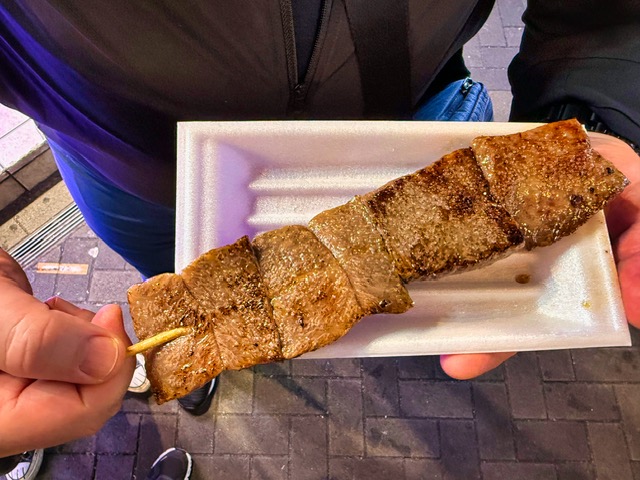
We decided to splurge on Kobe beef skewers—about $40 CAD for a single skewer.
Expensive? Absolutely.
Worth trying once? Honestly… yes.
The meat practically melts in your mouth like butter. The marbling gives it an incredibly rich texture that feels completely different from regular steak.
Kobe Beef vs Wagyu vs Regular Beef
Kobe Beef
Kobe beef is a very specific type of Wagyu from the Tajima strain of Japanese Black cattle raised in Japan’s Hyogo Prefecture. It must meet strict grading and certification standards to officially be called Kobe beef.
Wagyu Beef
Wagyu simply means “Japanese cow,” but not all Wagyu is Kobe. True Japanese Wagyu is still highly marbled and premium, though many international restaurants use the term more loosely for crossbred cattle.
Regular Beef
Regular beef is typically leaner with less marbling, giving it a firmer texture and less buttery richness than Wagyu or Kobe.
💡 Tip: Check for Kobe Certification
Not everything labeled “Kobe beef” is actually authentic.
If you’re paying premium prices, look for:
- Official certification signage
- Certificates of authenticity
- Clear labeling showing the beef comes from Hyogo Prefecture
Many legitimate vendors proudly display their certification.
The Crowds: Be Prepared
Dotonbori is busy.
By evening, some streets become shoulder-to-shoulder with tourists and locals alike. If you dislike crowds, visiting earlier in the day will be more comfortable.
That said, I genuinely think seeing Dotonbori lit up at night is part of what makes it special.
The energy is contagious. Loud music spills out of storefronts, food sizzles everywhere, and the entire district feels alive.
Is Dotonbori Family Friendly?
Yes—surprisingly so.
Despite the nightlife atmosphere, we found the area felt very safe and organized. Families, couples, solo travelers, and teens were all wandering around together.
Kids will probably love:
- The giant moving signs
- The bright lights
- Trying unusual snacks
- The boat rides
- The sheer energy of the area
The biggest downside for families is simply the crowds. Strollers could be difficult to maneuver during peak evening hours.
How Expensive Is Dotonbori?
Dotonbori is definitely more expensive than many other areas in Osaka.
Typical prices:
- Street snacks: ¥500–¥1500 ($5-13 CDN)
- Ramen meals: around ¥1500–¥2000 ($15-20 CDN)
- Kobe beef skewers: ¥4000+ ($40 CDN)
- Sit-down restaurants along the canal: noticeably pricier
You’re partly paying for the location and the experience—not just the food itself.
We found some of our favorite meals elsewhere in Osaka for much cheaper, but Dotonbori was still worth visiting for the atmosphere alone.
Nearby Areas Worth Exploring
Once you’re finished in Dotonbori, you’re also close to:
- Shinsaibashi for shopping
- Namba for restaurants and nightlife
- Nipponbashi / Den Den Town for anime, gaming, electronics, and maid cafés
It’s easy to turn a quick Dotonbori visit into an entire evening wandering Osaka.
| The Syps Family Dotonbori Tip Box 🐙 Visit at night for the full neon experience 🐙 Go earlier if you hate crowds 🐙 Bring cash since some food stalls are cash-only 🐙 Wear comfortable shoes 🐙 Be mindful that garbage cans are surprisingly rare in Japan – you take your garbage with you 🐙 Many locals eat near the stall instead of walking while eating (cultural etiquette) |
The Syps Survival Summary
Did we survive the $40 Kobe beef skewers? Emotionally yes. Financially no.
Dotonbori may not be where you find your cheapest meal—or even your best one—but it is where Osaka feels the most alive.
✔ Worth visiting for first-time Osaka travelers
✔ Incredible neon atmosphere and energy
✔ Fun street food experience
✔ Great for photos and people watching
✘ Extremely crowded
✘ Tourist-heavy and overpriced in places
Between the glowing canal reflections, giant moving signs, sizzling food stalls, and nonstop energy, it’s one of those places that feels almost overwhelming in the moment… and unforgettable afterward.
Touristy? Absolutely.
Worth experiencing at least once? Also absolutely.